

A school is born
Alice Walton and Lloyd Minor on launching a new medical school and the benefits of collaboration
This summer, a new medical school with bold ambitions to reimagine medical education welcomed its inaugural class. The new institution is the Alice L. Walton School of Medicine, and at its heart is a strategic collaboration with Stanford Medicine. Several Stanford faculty are contributing to AWSOM’s academic foundation — teaching students, mentoring faculty and supporting curriculum design.
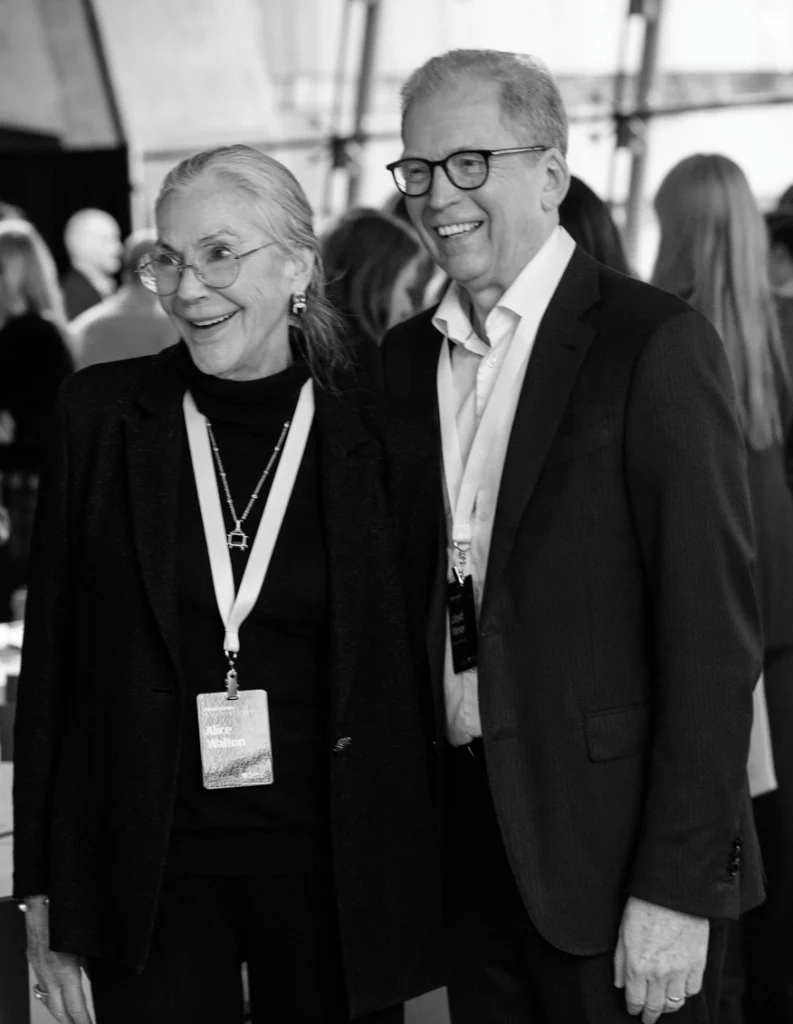
The collaboration also includes Stanford-led research mentorship programs, leadership development, clinical skills training and more. Alice Walton, founder of AWSOM, and Lloyd Minor, MD, dean of the Stanford School of Medicine, vice president for medical affairs of Stanford University and chair of AWSOM’s board, reflect on the journey that led to this moment and discuss the promise it holds in this conversation with Priya Singh, the executive vice president, chief strategy officer and senior associate dean of Stanford Medicine.
PRIYA SINGH: What does opening AWSOM mean for you both personally, and what do you hope it represents for the future of medical education?
ALICE WALTON: This is a watershed moment in our organizations’ efforts to transform health care to treat the whole person. It began with founding Heartland Whole Health Institute in 2019, expanded with the founding of AWSOM in 2021, and today we have a new school of medicine in a building designed to foster wellness on the campus of Crystal Bridges Museum of American Art.
Over the past several years we’ve hired faculty and staff, developed an innovative curriculum, secured preliminary accreditation status by the Liaison Committee on Medical Education, and taken many other steps that led to us welcoming 48 students to our campus in July. About half of those students are from our state or region, providing them with the opportunity to learn closer to home and potentially serve our region in the future. It’s a dream come true to me, and I hope that we create a ripple effect, influencing how medical education is taught across our country.
LLOYD MINOR: Reaching this milestone is deeply important to me. I grew up in Arkansas and know how health and health care can feel very different depending on where you live. AWSOM welcoming its first class marks a historic moment not just for Arkansas, but for all of us who believe that medical education should serve the full breadth of our nation. For me, it also represents an important step toward the kind of medical training we are all striving toward: preparing physicians who are grounded in the human experience of their patients while also equipped with the best tools science can offer. I’m proud to share in this moment and to partner with Alice in realizing her bold vision.
SINGH: How do you envision this collaboration advancing the way we prepare future physicians, particularly in tackling the major problem of chronic disease?
WALTON: Dean Minor and the Stanford Medicine team have been fantastic partners to our new school, and we envision this collaboration as an example of how institutions can work together in meaningful ways.
Tackling chronic disease in rural areas is a critical issue for our country, and our partnership with Stanford includes exploring the use of AI with a goal of providing better access to care in rural America. AWSOM graduates will demonstrate competency in AI through a structured progression of milestones and assessments within the curriculum. To ensure AWSOM faculty are equipped to meet this demand, we’re facilitating opportunities such as our Stanford Seminar Series, where educators and researchers from Stanford are sharing their knowledge and experiences with our faculty.
MINOR: What excites me most is how this collaboration allows us to learn from one another. At Stanford Medicine, we’ve been advancing precision health — applying data, technology and new biomedical discoveries to predict and prevent disease before it takes hold. AWSOM is a school that is rooted in the lived realities of heartland communities. And Alice’s vision for whole-person health, which integrates the arts and humanities into medical training, adds another essential dimension.
Through this blending of strengths and focus, we can prepare physicians who not only deliver excellent care but also gain skills to address the complex underlying factors that contribute to our nation’s chronic disease crisis. That includes training future leaders who can develop and deploy AI solutions to meet this challenge.
SINGH: Addressing chronic disease is a central health challenge nationwide. Lloyd, how do you see Stanford Medicine’s collaboration with AWSOM advancing this goal, especially for communities far from academic medical centers?
MINOR: The burden of chronic disease is felt most in communities farthest from specialty care. Today, nearly half of all U.S. counties lack a practicing cardiologist — yet these same areas often experience higher rates of heart disease, diabetes and other chronic illnesses.
While innovation and system-level change are essential, education is one of our most powerful levers. Through this collaboration, we aim to train a new generation of physicians who will be better prepared to meet the realities of chronic disease — not only with clinical expertise but also with a deeper understanding of the factors that drive it.
That means equipping them with tools to navigate complex care environments, coordinate across disciplines and use data to guide timely decisions. It also means instilling the skills — and the mindset — to build trust; engage patients holistically; and understand the role that food access, transportation and community conditions play in shaping health outcomes.
It’s an exciting vision—one that I’m looking forward to seeing unfold in the years to come.
SINGH: AWSOM’s mission is deeply rooted in serving the heartland and rural communities — places that often face the steepest barriers to care. Alice, how does this mission shape your vision for medical training and community impact?
WALTON: It’s essential for the future of our country that we train physicians who are equipped to care for underserved and rural populations. Community-centered care is a part of AWSOM’s curriculum, including early clinical experiences, virtual care and an understanding of the barriers to health that rural communities face. Students will be empowered to use AI and digital health tools to provide rural communities with greater access to health care through programs that can play a role in addressing chronic disease.
We also need to reduce the barriers to medical education for those coming from rural or underserved communities, which is part of the reason AWSOM is located in Northwest Arkansas. Additionally, to ensure that this transformative educational experience is accessible to a wide range of applicants, we’ve waived tuition for the first five cohorts of students.
SINGH: Alice, you’ve made integrating the arts and humanities into medical education a hallmark of your approach to training. How do you believe this can transform the way physicians understand and care for their patients, especially those living with chronic illness?
WALTON: It’s proven that the arts enhance our health and well-being, and for someone with a chronic condition — and I speak from experience here — it can provide a respite and help foster whole health. I went through a decade of hospital visits and surgeries to address a chronic condition, and as one of the tools in my toolkit to support my health, I brought watercolors with me and painted where I wanted to be instead of where I was. Even now, walking into an art gallery and viewing art helps lower my blood pressure.
Our curriculum at AWSOM includes a focus on the arts as a way to further develop empathy, critical thinking and a host of other skills. Students take drawing classes to sharpen observational and empathetic skills and practice close-looking at art to enhance their attention to details. Through a range of interactions with the arts, we hope to develop doctors who are not only clinically competent but are also skilled in fostering human connections and caring for the whole person.