

Cells that heal
Offering hope to beat cancer when chemo falls short
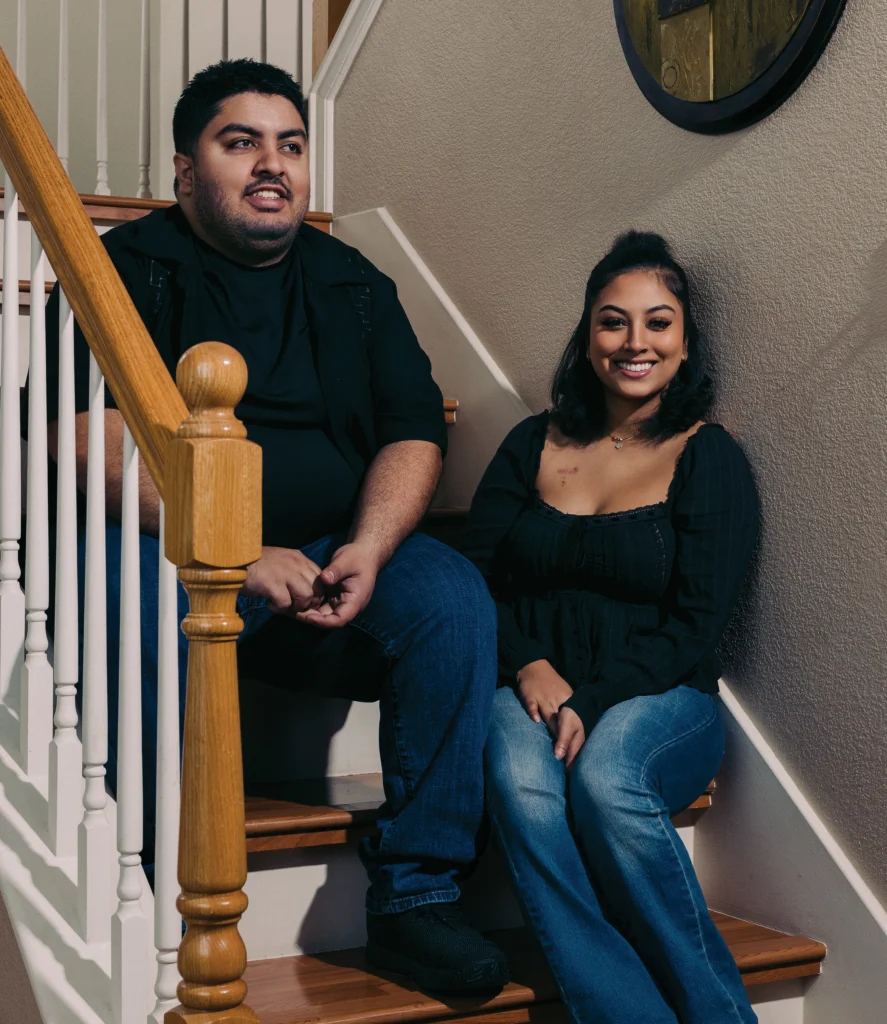
By the time Jordan Mulgado’s blood cancer was diagnosed, dozens of tumors had penetrated her internal organs. One lung had collapsed; her pancreas was inflamed; and her liver, stomach and thyroid were not functioning well.
She was 18, with no history of serious illness. Now, she had bone pain and a dry cough and struggled to keep food down. The walk to the bathroom left her breathless.
After a week in a hospital in California’s Central Valley, Mulgado learned that she had an advanced case of non-Hodgkin’s lymphoma, a type of cancer that leads to out-of-control growth of cells in the immune system.
“When I first heard the word ‘cancer,’ I didn’t cry, I just sat there in shock,” she recalled. “I know it’s silly, but the only thing I was worried about was that I had a test next day in class. I was more worried about the logistics of it, rather than the thought, ‘Oh, I’m going to die.’”
That moment began a two-year odyssey of intensive chemotherapy, CAR-T cell therapy and, ultimately, a bone marrow transplant at Stanford Health Care that restored her to good health.
On a sunny day in October, Mulgado was one of about 1,000 recipients of bone marrow transplants or other cellular therapies who gathered with their families under white umbrellas for a patient reunion hosted by Stanford Health Care’s Blood and Marrow Transplantation (BMT) and Cellular Therapy program. Together, they shared the joy of being alive.
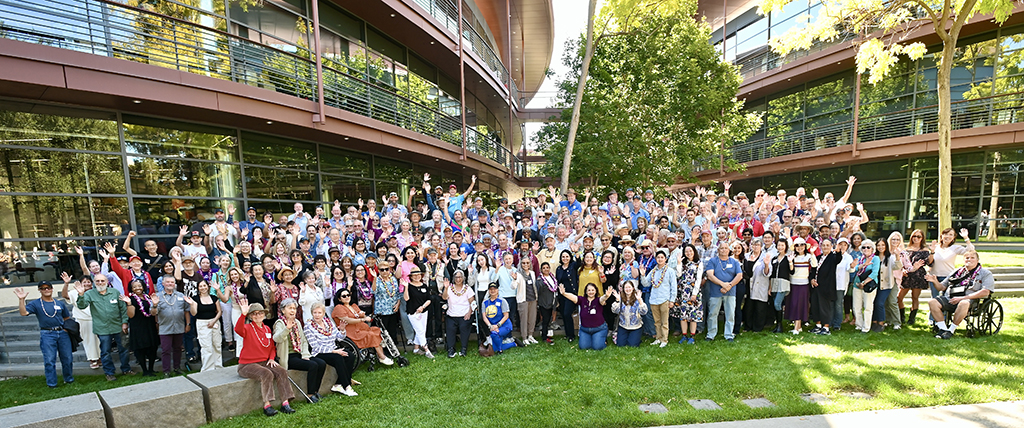
“Patients are here because you’ve given them their lives back,” said David Miklos, MD, PhD, chief of the BMT and cell therapy program, addressing the faculty and staff among the crowd.
More than 10,000 people have received cell therapies at Stanford Medicine in the past 40 years, making it one of the largest programs in the country, said Miklos, a professor of medicine and a member of the Stanford Cancer Institute.
In 2024 alone, some 820 patients received these treatments, double the number from 2020. The treatments all use living cells to fight disease, with bone marrow transplantation being the earliest form of the approach. It was first used, starting in the late 1950s, to replenish the blood-forming cells in the bone marrow after they were damaged by treatment for blood cancers.
Bone marrow transplants and other cell therapies are still used mostly to treat blood cancers, but they are increasingly used for other conditions, including other types of cancer and diseases of the immune system and the bone marrow itself.
Better transplants
Thanks to scientific advances in the field since those early days, patients with blood cancers are surviving longer, with 80% of people who have bone marrow transplants living for a year or more. In the early 1980s, most died within six months, Miklos said. Still, transplantation has its risks, most commonly a patient’s body rejecting the donated cells as foreign, causing a war within the body known as graft-versus-host disease.
Robert Negrin, MD, a professor of medicine who preceded Miklos as director of the program, and his colleagues have developed a transplantation method that could prevent the condition.
The procedure calls for transplanting only a specialized group of powerful cells from a donor, rather than flooding the patient with all the donor cells. In a clinical trial published in 2025 in the journal Blood, Everett Meyer, MD, an associate professor of medicine and of pediatrics, and colleagues showed that using the new approach made transplantation less toxic and very effective.
“By making a precise recipe we get better outcomes,” Miklos said.
“It seems like a miracle to some people, but it’s not. It’s science. CAR-T redirects the patient’s own cells to fight their cancer.”
David Miklos, MD, PhD, chief of the BMT and cell therapy program
Another form of cell therapy, known as CAR-T (chimeric antigen receptor therapy), has revolutionized the field by enlisting the patient’s immune cells to attack the disease.
This involves removing some of the patient’s cells and genetically editing them to recognize cancer cells. The new cells are living therapies that multiply in the lab, and once infused back into the patient, they seek and destroy the cancer beginning within a week of infusion, with astounding results.
“It seems like a miracle to some people, but it’s not,” Miklos said. “It’s science. CAR-T redirects the patient’s own cells to fight their cancer.”
Stanford Medicine treated its first CAR-T patient in February 2016 and is a premier center for this form of therapy, treating 280 to 300 patients a year, Miklos said. Whereas only 12% of lymphoma patients previously survived a year, the new procedure has boosted that to 75%.
“Most of all, it’s a one-and-done therapy,” he said. “You are finished — no repeat chemotherapy cycles or daily pills.”
Now, Stanford Medicine doctors are leading the cell therapy field by combining these two powerful techniques — CAR-T cell therapy and bone marrow transplantation — for even better results.
Mulgado began her treatment in 2022 with eight chemotherapy rounds, but they failed to control the cancer. She then had two different CAR-T infusions. The second was more potent than the first, with a compound manufactured at Stanford Medicine that is the first cell therapy to aim at a second target on the cancer cells. A recently published study in The Lancet by Matthew Frank, MD, PhD, an assistant professor of medicine, Miklos and others proved the second approach to succeed in more than half of patients with B-cell lymphoma whose disease had worsened despite standard therapy.
But for Mulgado, her lymphoma recurred after these two CAR-T therapies. She also developed a temporary neurologic side effect that left her unresponsive, as if she were in a coma. She woke up confused a few days later and initially struggled with simple tasks like chewing her food and writing legibly.
“I thanked him for being my donor and saving my life. I said he was a true older brother, a superhero. A lot of tears were shed that night.”
Patient Jordan Mulgado
She practiced daily exercises, penning the sentence, “My favorite flower is a sunflower.” Over the months that followed she recovered from the side effect and prepared herself for a blood stem cell transplant.
Mulgado was fortunate that one of her brothers, Dillon, was a close immunological match, able to serve as her blood stem cell donor, and he readily agreed. “I thank him for literally giving me a part of himself,” the 21-year-old resident of Turlock, California, said at the reunion event.
After the transplant in June 2024, Mulgado had to take as many as 30 pills a day, including medications to help prevent rejection of the new cells, which have since repopulated her immune system. She is down to only two pills a day.
Now, Mulgado is a sophomore in college, majoring in biology, and spending her free time walking her English bulldog, cooking and hanging out with her boyfriend, she said.
“These days I feel normal, actually. I’m doing the things I did before. The only reminder of what I went through is that my hair feels different,” she said, explaining that it has turned dark and curly. “I look at the experience as something that is going to help me in the future.”
Mulgado’s goal is to become an oncologist — the kind of physician who understands all too well the challenges of being a cancer patient.
At her brother’s wedding in the summer of 2025, Mulgado publicly expressed her gratitude for his support.
“I thanked him for being my donor and saving my life,” she recalled. “I said he was a true older brother, a superhero. A lot of tears were shed that night.”
She now plans a trip in 2026 to the Basilica of Our Lady of Guadalupe in Mexico City, a major Catholic pilgrimage site, following through on a vow she made early on in her treatment.
