
Built to last
Why joint replacement is better and more popular than ever
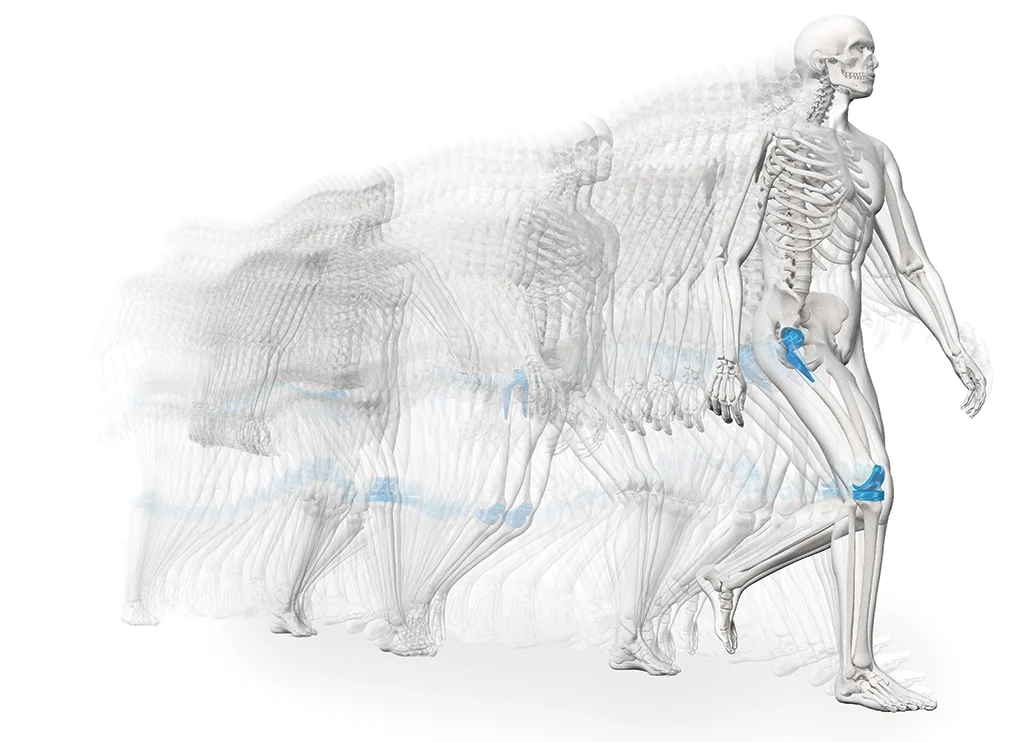
At age 17, Chloe was suffering from painful osteoarthritis in her right hip, the by-product of a serious childhood joint disorder. That’s when her family was referred to orthopaedic surgeon William Maloney, MD, at Stanford Medicine.
Maloney, the Boswell Chair of Orthopaedics, was able to replace the hip with confidence despite the patient’s young age, knowing the newly developed plastic-lined joint would have a longer lifespan than its predecessors. That was nearly two decades ago.
“She was finally able to run and play basketball,” he said. “I saw her recently and she’s got a child of her own. We X-rayed the hip and it looks like the day we put it in. It should last forever.”
Chloe, whose name has been changed at her request, received her hip replacement in the early days of this ongoing “polyethylene period” — marked by the advent of a seemingly wear-resistant plastic perfect for replicating the smooth, frictionless movement cartilage naturally provides to a hip socket, knee joint or shoulder. It supplanted earlier forms of plastic that often wore down and caused osteolysis — where the immune system’s attack on stray plastic particles instead dissolved the surrounding bone and triggered an onslaught of revision surgeries.
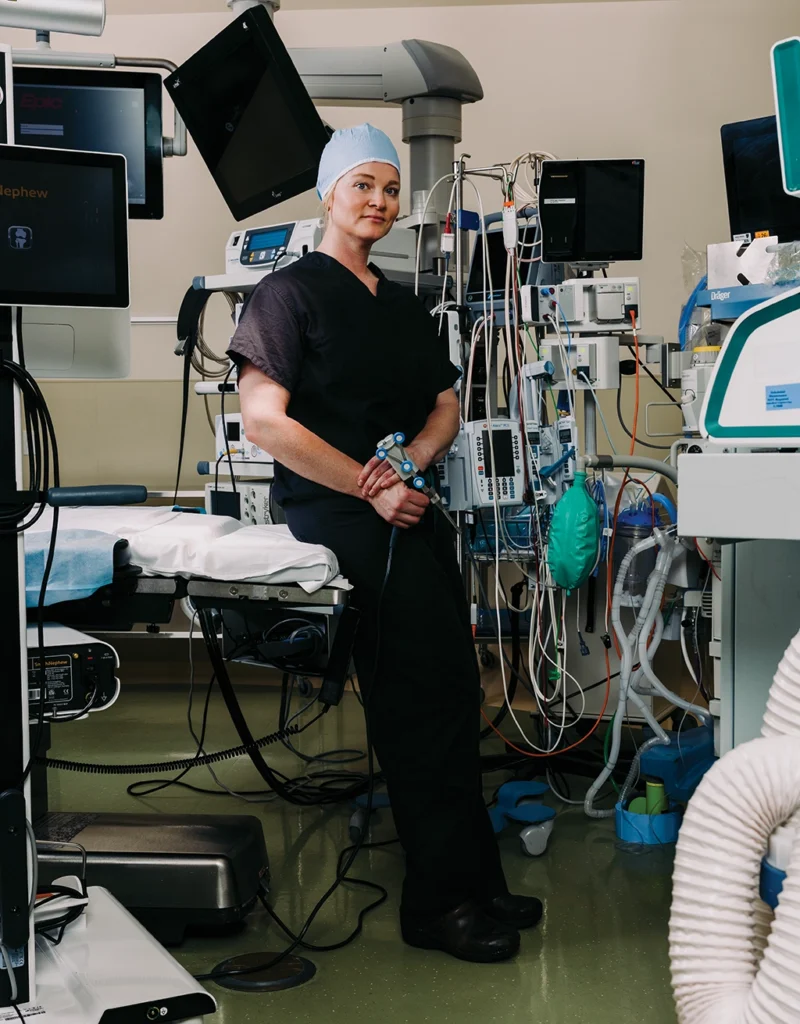
Polyethylene is the predominant form of plastic worldwide, a polymer constituting everything from sandwich bags to squeeze bottles to playground equipment. The version used for today’s joint parts was strengthened via ionizing radiation, which cross-links the material at a molecular level.
While there is legitimate consternation about plastic’s environmental impact, the power of a molecularly optimized piece to fortify a new hip or knee — potentially for a person’s remaining lifetime — has altered the joint replacement landscape.
“It’s changed the game — there’s really no other way to say it,” said Jessica Hooper, MD, a Stanford Medicine surgeon and a clinical assistant professor of orthopaedic surgery.
The previous norm for a replacement joint’s longevity was 10 to 15 years. Now an implant is expected to last for the rest of most recipients’ lives, which explains why the number of people having a hip or knee replaced has surged — younger and older, suffering from a wide range of disability. That growth is expected to accelerate as the next decade dawns.
Key takeaways
- More than 20% of adults in the U.S. suffer from arthritis or chronic joint issues.
- Nearly half of those people report that those joint issues limit their everyday activities.
- Thanks mostly to the advance in materials, the expected lifespan of replacement hips and knees has increased in the past two decades from 10-15 years to 25 years or more.
“We’re doing well over a million joint replacements, knees and hips, in the U.S. annually,” said Jason Lipof, MD, a Stanford Medicine surgeon and a clinical assistant professor of orthopaedic surgery. “And that number is expected to keep climbing.”
Many roads to a new hip
Fortunately, said Maloney, the interest of budding physicians in the field of arthroplasty — the term used to encompass surgery that replaces, remodels or realigns joint bone surfaces — is keeping pace with demand, partly thanks to advancements that go beyond materials. Among them are robotics, augmented reality and artificial intelligence, not to mention just fresh approaches to surgery.
A case in point: Anterior hip replacement, a different take on the more standard hip replacement procedures, performed via a small incision at the front of the hip, has gained traction because of its purported improvements in sparing muscle, limiting the risk of dislocation and speeding recovery time. It’s also what the new generation of orthopaedists is being taught, which is one reason anterior has so quickly caught up to posterior in annual U.S. surgeries.
It is, however, a more technically demanding procedure with a steeper learning curve that often requires a specialized surgical table. The table looks more like a piece of complex workout equipment and lets the team capture X-ray views of the hip joint from multiple angles.
Posterior, the most common approach for decades, involves an incision at the buttocks, rather than the front of the thigh, as patients lie on their side on a flat table. It provides a fuller view without X-rays and is better for muscular and larger people. But it can also necessitate muscle detachment, which increases healing time immediately after surgery.
The consensus: Both versions of the surgery have successful track records. As Maloney noted, there’s a reason total hip replacement was dubbed the surgery of the century by the medical community nearly two decades ago: “Either way you do it, it’s a great surgery.”
Variety of choice is a nice bonus. But advancements in materials, along with precision-aiding technology, are giving surgeons new opportunities to get their patients back to moving the way they used to — particularly patients who want to push the limits with their newly installed parts.
“For the most part, I feel comfortable telling my knee and hip patients they can go back to doing whatever it is they do — cycling, hiking, surfing, pickleball, aerial acrobatics, beach volleyball,” Hooper said. “I tell them, ‘Don’t worry about it — just go back to living your best life.’”
Same-day joint replacement
Hooper performs the anterior hip approach, uses robotics to better understand a joint’s natural movement spectrum during knee replacement surgery, and is bullish on the potential of new technology to give surgeons more detailed digital imagery from which to work.
But she’s perhaps most impressed by more fundamental advancements she has witnessed: More people of all ages and health levels are getting joint replacements and going home the same day instead of staying in the hospital. Better pain control is a big reason this works, making it possible for patients to recover at home. Close attention is also being paid to the pre- and post-surgery experience, she said.
“We’re optimizing patients beforehand — getting them to their healthiest baseline before we go in and do this big surgery,” Hooper said. “We also have a director of perioperative medicine for anesthesia, whose job is to look beyond the hospital experience and think about what pain management should look like when the patient goes home.”
Hooper said this holistic approach is paying dividends for surgeons and patients alike, limiting complications and allowing safe same-day trips home, where recovery begins in more comfortable surroundings.
“We were headed for more of an outpatient future already, and then COVID took the hospital out of the equation,” said Hooper. “So, we’ve really been trying to optimize the patient’s surgical journey, to get them through it as quickly and easily as possible.”
Lipof said he thinks a move toward regional anesthesia with light sedation — such as a targeted spinal or epidural pain block — and away from general anesthesia, which can leave patients groggy and nauseated, has also played a big role in getting patients home the same day.
“You’re up and walking and doing stairs with physical therapy a couple hours after surgery,” he said. “Most people do really well.”
Joints are not created equal
While the ball-and-socket movement of the hip is simple, and most hip replacement patients are satisfied with their results, the knee provides a more complex equation. According to Lipof, 15% to 20% of total knee replacement patients nationwide express some level of dissatisfaction.
Besides the fact that knees are just “a bit more complicated,” Hooper said that attempts to personalize alignment of a knee by matching up imagery of a patient’s other knee to the one being replaced are well meaning but still lack precision.
“An X-ray isn’t a perfect way to evaluate that,” she said. “We don’t have good tools to evaluate either a native knee or a replacement in motion, in a reproducible setting. So until those diagnostics become more available, there’s a lot of information we’re missing.”
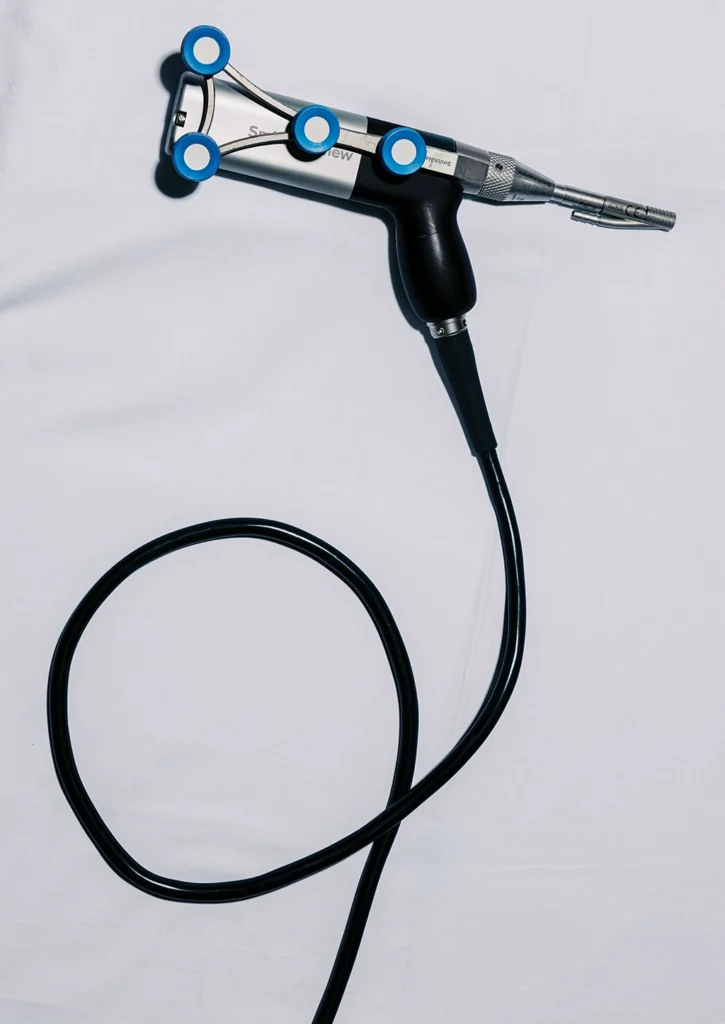
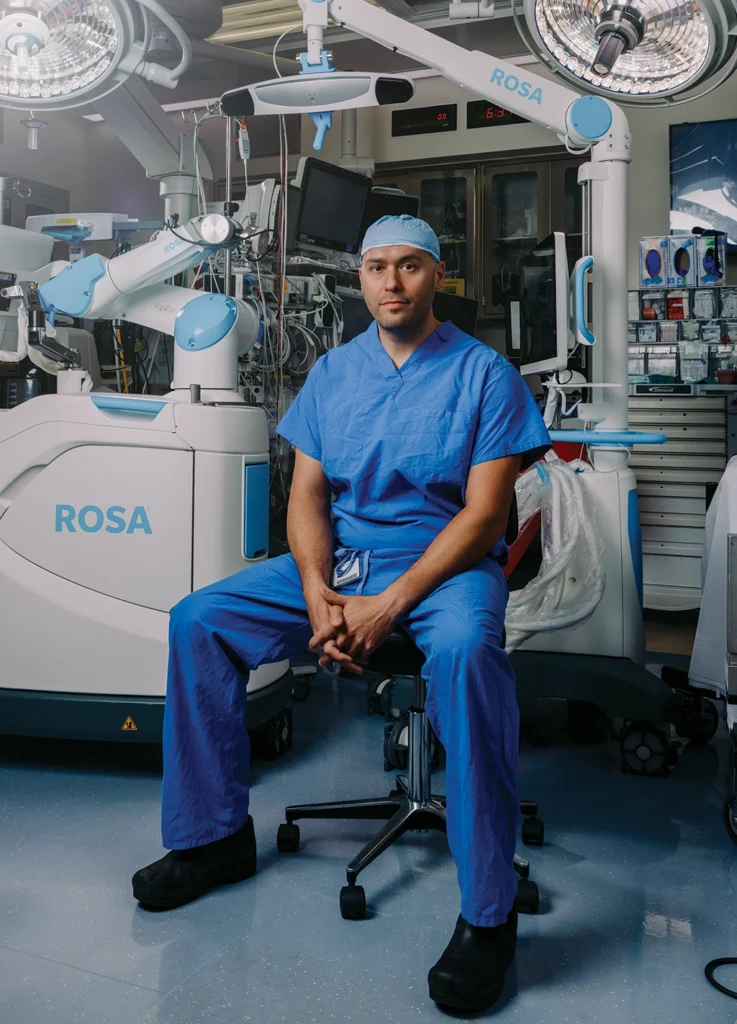
Lipof and Hooper use a robotic assistant device during knee procedures to help precisely guide their measurements when making bone cuts and aligning the new parts. Akin to a smart version of a handheld power tool, it uses haptic feedback to keep the cutting blade within bounds established by a presurgery 3D model and measures tension in the ligaments so the surgeon can get the new parts into angles that are as natural as possible.
“Something kind of magic happens with the robotics, where it gives you the data and insights into that patient’s anatomy,” Lipof said. “You can use it to understand what their new knee is going to do and how to make it feel more like their own knee.”
“The adage that today’s 80-year-old is yesterday’s 60-year-old is really true.”
William Maloney, MD, Boswell Chair of Orthopaedics

Along with robotics and advances in materials — not only the improved plastic but also ceramic and metals, including titanium alloys, are used in the knee — new technology is coming down the pike.
Computer navigation gives surgeons a 3D map of the joint in the operating room during surgery, and augmented reality smart glasses overlay real-time, patient-specific 3D data onto a surgeon’s field of view. And Lipof believes that, in the next year or two, we will see semiautonomous robots helping perform knee replacement with “likely fully autonomous robots coming in the near future to an operating room near you.”
The closest thing to that level of futurism now can be seen in what’s known as a “smart knee,” where a replacement joint includes a sensor that can relay real-time data to a doctor and provide recovery metrics to a patient and their physical therapist.
A joint implant that monitors your health
In March 2026, Lipof became the first Stanford Medicine surgeon to implant a smart knee. The patient, Barry Mainz, a Silicon Valley executive, learned about the newly available device from a friend in the tech world.
Mainz hoped the smart knee, which is essentially an implanted activity tracker, would help him return to skiing, running and hiking as quickly as possible after his failing knee joint was replaced.
“Tons of people use personal activity trackers. This is just one you don’t have to remember to take on and off, or charge,” Lipof said. “The data it collects, like step count, range of motion, walking stride, gets put into these graphs and shows a patient their progress. So, it’s a motivating factor in recovery.”
Mainz, immersed in tech and still a dedicated athlete in his early 60s, was perhaps the perfectly motivated first patient. “I wanted my life back,” he said. “And with the data you get, there’s no BSing yourself about your rehab. It’s cause and effect right there for you on the screen.”
Beyond disability management
Derek Amanatullah, MD, PhD, an associate professor of orthopaedic surgery, remembers spending much of his early career redoing joint replacements whose materials had worn out, rather than helping patients decide when a new joint would improve their active life.
Now, with those types of drastic revisions mostly gone, it’s like those days have “totally disappeared,” he said, “and it’s a huge boon to patients.”
The profession has shifted from managing disability to preserving lifestyle. And the material advancement makes it a potential game changer for 80-somethings and 50-somethings alike.
“We now see 80-year-olds in our clinic who are hiking and taking 20-mile bike trips and walking 18 holes of golf and playing tennis,” Maloney said. “The adage that today’s 80-year-old is yesterday’s 60-year-old is really true.”
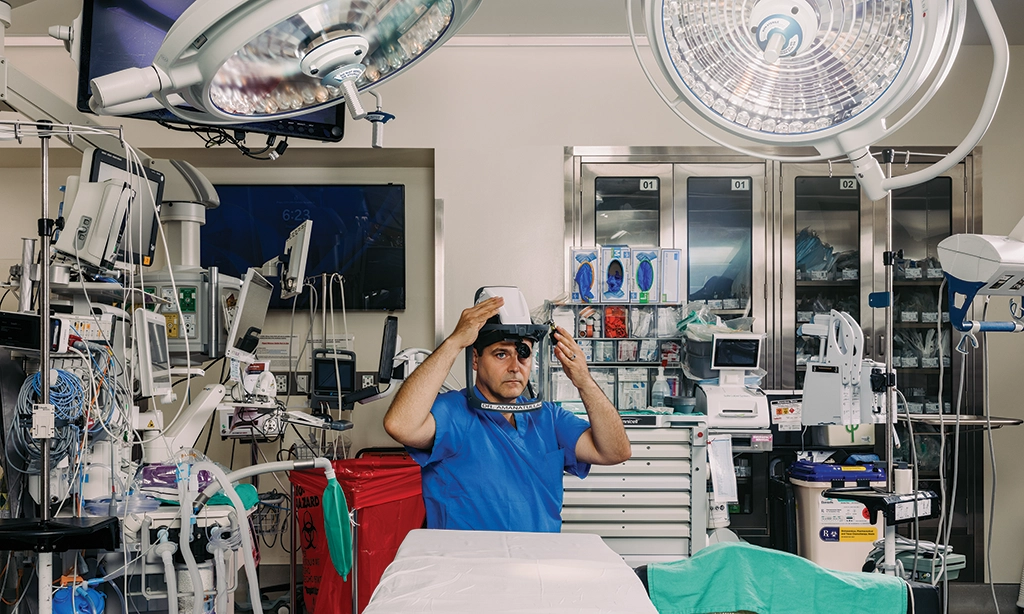
Some, of course, are still hoping for solutions that won’t leave them feeling foreign-material-laden and bionic. Research on stem cells and other regenerative mechanisms continues, including a promising recent Stanford Medicine study that regrew cartilage in the knee joints of mice and in human tissue.
While biologic resurfacing — a joint-sparing technique to repair or replace damaged cartilage and bone with natural tissues (allografts/autografts) rather than metal and plastic — is an exciting concept being studied, it’s not imminent.
“That’s the holy grail, no doubt, and it’ll come. People are working on it,” Maloney said. “But it’s not like we have to solve the problem tomorrow. Because the outcomes right now are pretty darned good.”
There remains, though, one risk that every joint replacement patient faces: infection. It’s rare, but it can be extremely serious. Amanatullah, who has researched the problem in depth, often presents a graph showing that the five-year mortality of a chronic joint infection rivals that of breast cancer and colon cancer.
It also can seem random. Amanatullah’s research suggests that most of the risk comes not from the instruments or the people in the operating room but from the patient’s own body. It remains unclear whether bacteria are brought in from the skin surface as surgery begins or whether they are awakened from dormant microbial colonies already living deep within the hip or knee.
“The most rewarding part is just watching people get back to their normal life, That’s really the whole point of doing this.”
Jessica Hooper, MD, a Stanford Medicine surgeon and a clinical assistant professor of orthopaedic surgery
Since prophylactic antibiotics, which are taken ahead of surgeries to avoid bacterial infections, became routine roughly 50 years ago, Maloney said, “there’s been no improvement in infection rate, so it’s really an unsolved problem. The big winner will be whoever can solve or put a dent in the infection problem.”
The good news: The risk of infection remains low — 1% to 2% for each joint replaced — which is why the replacement numbers keep climbing.
Amanatullah is known for pushing beyond what most surgeons are willing to do. He operates, for instance, on patients with a high body mass index, a group he believes is marginalized because their surgeries can be more difficult. “Am I supposed to tell you you’re too risky, that you have to lose weight to earn surgery from me?” he said, emphasizing that the added risk is lower in absolute terms than patients are often told.
For the million-plus Americans who will get joints replaced in the coming year, the risk-reward quotient has swung far enough in favor of reward. Which also happens to be the word that comes to mind for surgeons thinking how fortunate they are to be in this moment with materials and technology.
“The most rewarding part is just watching people get back to their normal life,” Hooper said. “That’s really the whole point of doing this.”
The 17-year-old patient that Maloney was able to help get back to normal life nearly two decades ago agrees. Chloe has backpacked across Southeast Asia, married, continues to play rec basketball occasionally and is set to give birth to her second child.
“The procedure profoundly changed my life,” she said. “I have been so grateful that this hip has been able to endure the many chapters of life — and I hope for many more!”