

Big ideas, three short minutes
Meet the finalists who distilled their years of biomedical research into 180 seconds
Imagine yourself standing before a panel of judges to defend your PhD thesis by articulating what you had studied and discovered during your years as a doctoral student. This academic rite of passage usually takes about two hours.
Now try doing it in three minutes — TED Talk-style. In a packed auditorium of faculty, dignitaries, peers, friends and families.
That challenge was put to 10 Stanford University PhD students from various disciplines during the final round of a Three Minute Thesis competition on April 16, 2026, hosted by the Stanford University Office of the Vice Provost of Graduate Education.
Founded by the University of Queensland, the 3MT competition helps graduate students develop the communications skills to showcase and distill their research and why it matters for an audience of nonexperts.
Judges assessed the presentations based in large part on how well the audience understood the research and why it matters — all within the three-minute time limit. The winners won bragging rights and cash prizes ranging from $500 for the People’s Choice Award to $5,000 for first place.
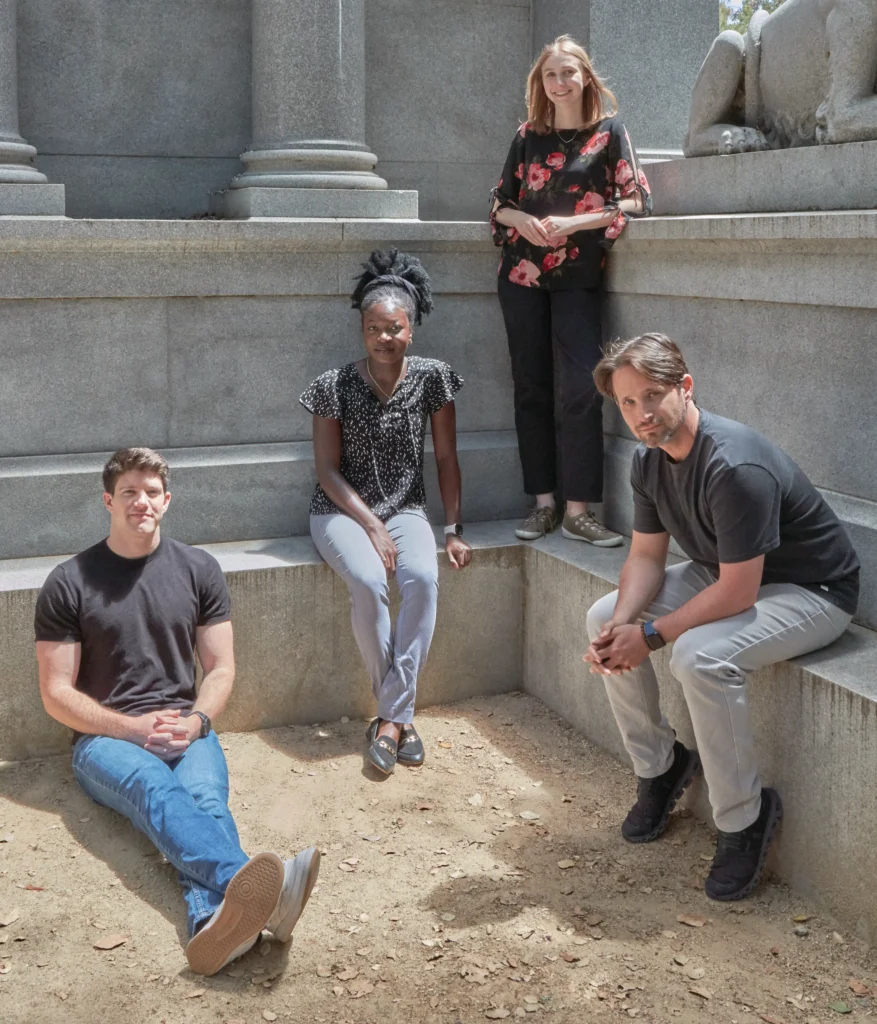
This year, four of the talks converged on a common theme: human health. From discoveries about the immune system to research enabling smartwatches to detect disease, these medical-focused finalists translated complex science into clear, compelling stories.
Below, they share what they study, how they approached the three-minute challenge, and what they hope their work will change. Here are their stories:
A.J. Phillips
Electrical Engineering
3MT competition: First place
Presentation subject: Teaching neural implants to speak the brain’s language
Watch his video online at stan.md/PhillipsVideo
A.J. Phillips, who grew up in Las Cruces, New Mexico, came to Stanford University for his PhD in 2020 with a goal of creating algorithms to address brain disorders.
In the lab of his adviser, E.J. Chichilnisky, PhD, a professor of neurosurgery and of ophthalmology, Phillips researched technology to restore vision to people blinded by retinal degeneration.
During his 3MT presentation, Phillips described an electronic neural implant his research team is developing to replicate a healthy retina’s behavior as it converts light entering our eyes into patterns that represent what we see.
The challenge, he said, is to match the speed and precision of a human brain doing the same task, a feat tested in many all-night experiments stimulating and recording neural activity from retinas.
Phillips said his decade-long hobby of competing in triathlons informs his approach to research.
“My love for triathlon stems from the defining characteristics of the sport — dedication to long-term goals and tenacity in the face of adversity — which are the same attributes that I try to employ as a scientist,” he said.
Ibukun Ajifolokun
Materials Science and Engineering
3MT competition: Second place
and People’s Choice Award
Presentation subject: No antigen left behind: How injectable hydrogels improve combination vaccine delivery
Watch her video online at stan.md/AjifolokunVideo
Ibukun Ajifolokun, a third-year PhD candidate, was born in Lagos, Nigeria, and grew up in Ontario, Canada, before her family moved to Chicago when she was in high school.
Ajifolokun researches polymer science and biomaterials in the lab of her adviser, Eric Appel, PhD, an associate professor of materials science and engineering.
In her 3MT presentation, she described a soft injectable hydrogel the lab is developing to provide sustained-release of multiple vaccine components at once, thereby reducing the number of doses needed in a vaccination series.
“It means a mother from a rural village doesn’t have to choose between multiple clinic visits to vaccinate her child or going to work and feeding her family,” Ajifolokun said. “It means fewer missed vaccinations and more lives saved.”
She said she envisions a career in developing biomaterials for clinical use, but she also wants to teach and mentor others to help them understand science.
“I love being with people because I’m reminded that the ultimate goal of research is the betterment of humanity,” Ajifolokun said.
Colette Benko
Developmental biology
3MT competition: Third place
Presentation subject: Cellfies: Understanding how cells communicate with the immune system
Watch her video online at stan.md/BenkoVideo
Colette Benko, a fourth-year PhD candidate, was born and grew up in Calgary, Alberta. In the lab of her adviser, Andrew Fire, PhD, a professor of pathology and of genetics, Benko explores how cells communicate with the immune system.
In her 3MT presentation, she used the analogy of selecting which photos to post on social media and how cells display peptides — tiny pieces of protein — on their surface to update the immune system. This constant updating allows our immune cells to quickly determine if something isn’t right.
“Understanding how our cells select antigens could be instructive in the development of immunotherapies for a wide variety of illnesses,” Benko said.
When she’s not in the lab, Benko is exploring nature. “Whether it’s volunteering as a docent at Año Nuevo State Park or trekking into the Bwindi Impenetrable Forest to see gorillas,” she said, “I love being surrounded by wildlife and sharing the diverse biology found in nature with my community.”
Ziv Lautman, PhD
Bioengineering
3MT competition: A finalist
Presentation subject: Dr. Smartwatch: What your wearable knows could change your life
Watch his video online at stan.md/LautmanVideo
Ziv Lautman, a native of Israel, grew up in a family that emphasized the importance of community and making an impact. He came to the San Francisco Bay Area in 2015 to lead American operations of an environmental pollution-monitoring company he co-founded.
In 2019, an interest in joining the AI boom brought Lautman into the Stanford Medicine lab of structural biology associate professor Adam de la Zerda, PhD, where he earned a master’s in bioengineering.
In the lab of his PhD adviser, genetics professor Michael Snyder, PhD, Lautman researched the potential of wearable technology and AI-driven technology to transform early disease detection.
In his 3MT presentation, Lautman described an early warning AI system he built to close the gap between data collected from patients’ health trackers and their clinicians. Lautman believes that kind of data might have prevented the sudden cardiac death of his research partner had it been available and analyzed by his doctors.
“Disease does not arrive suddenly. It whispers first,” he said. “And no matter if the storm is brewing in your body or your mind, wearables can hear it coming before it is too late.”
