Keeping athletes with disabilities in the game
Inside the specialized field of adaptive sports medicine
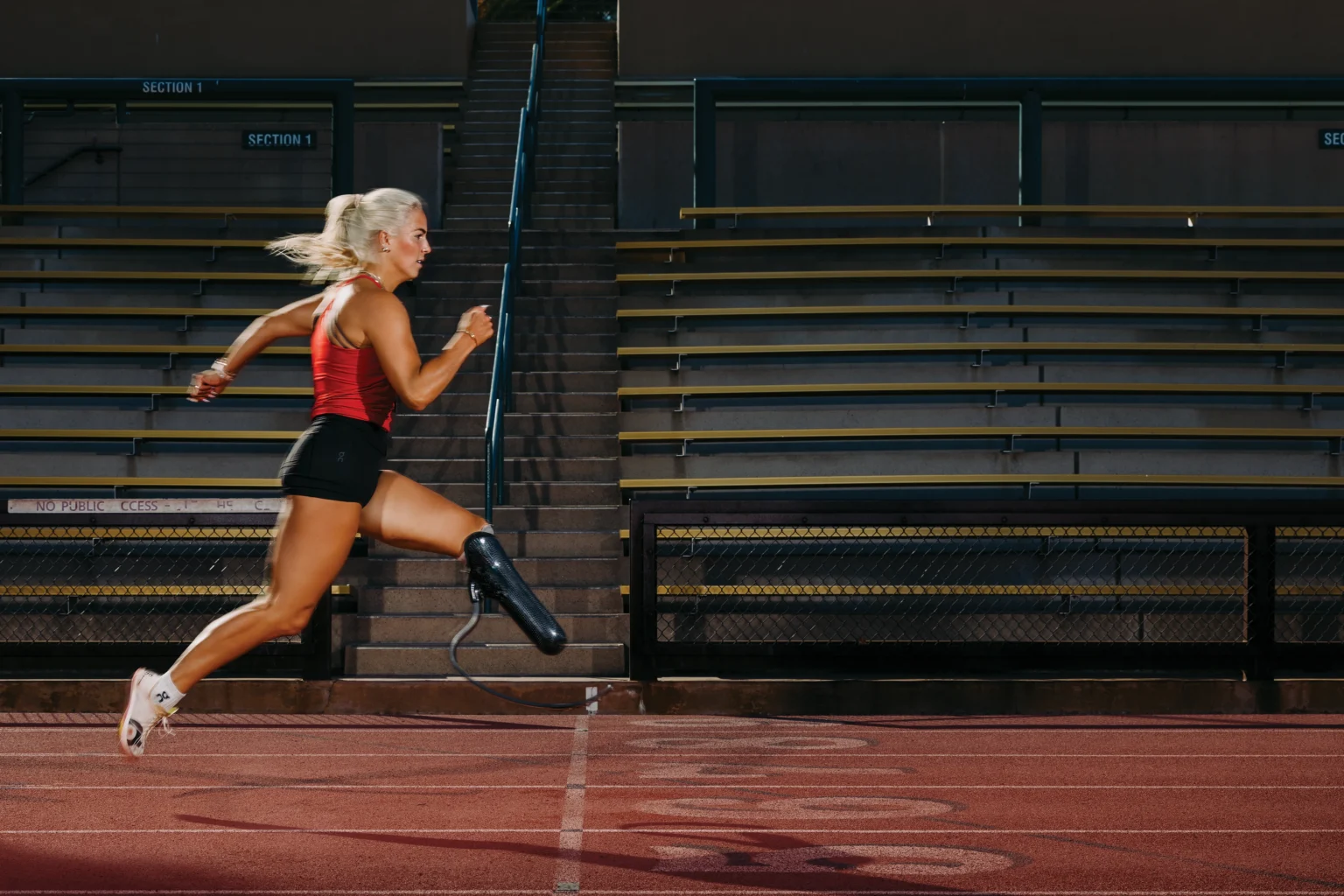
Sydney Barta’s stress fracture was not particularly unusual. In 2024, the Stanford University sprinter broke her right foot while training for a race. Foot stress fractures are common overuse injuries among runners, especially young female runners.
“For a long time, I had to modify a lot of workouts because of my foot injury. But I had teammates with similar injuries who also had to modify,” Barta said. “All of our bodies are different. Mine just happens to be very different.”
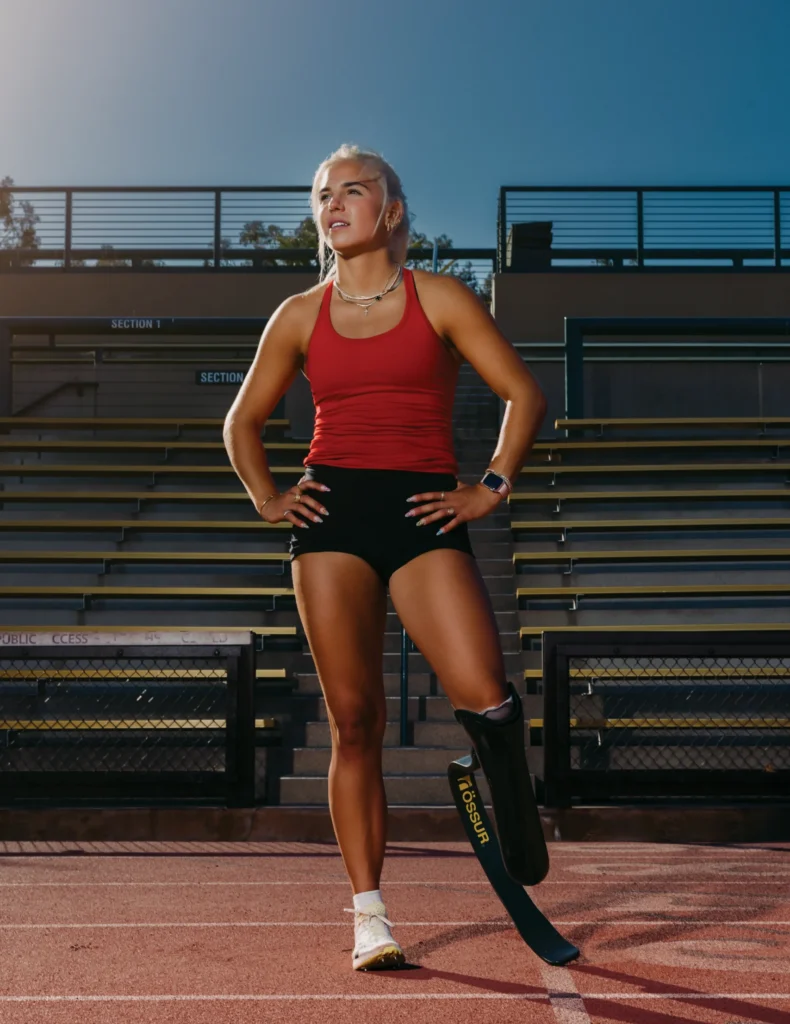
That’s because the foot Barta broke is her only foot. Barta, who recently graduated with a major in bioengineering, is an amputee who lost her left foot and part of her lower left leg after a metal scaffolding fell on her following a race when she was 6. She is also a Paralympian and the first amputee to compete for the university’s track and field team.
Key takeaways
- Among people with disabilities, participation in adaptive sports is associated with improved mood, new friendships, stronger community bonds and greater employment opportunities.
- Athletes competing in the Paralympic Games have more than double the number of injuries as those in the Olympic Games.
- Many of these injuries are unique to athletes with disabilities and vary depending on the sport and the specific impairment.
Barta has always been into sports — her mother was an athlete and encouraged Barta to try different sports once she was fitted with a prosthetic. She tried softball, basketball, figure skating and water polo, all with nondisabled teams.
But she was a young teen before she learned about adaptive sports through other families she and her mother met through the shop where she purchased her prosthetic. A parent told them about an adaptive track program in Indiana, and Barta signed up.
“I ended up falling in love with competing but also competing on the Para side of things. It was really unique for me to have that community,” Barta said. “It’s not often that you meet people who also love sports, have your same disability and understand that struggle, whether that’s the literal struggle of completing the workouts with a disability or the struggle to be included on a team.”
That Barta broke her sound foot is not unusual for an athlete with a disability, said Yetsa Tuakli-Wosornu, MD, associate professor of orthopaedic surgery and founding director of the Sports Equity Lab at Stanford, a research group aimed at eliminating inequities in sports.
“Injuries related to bodily asymmetry are higher amongst athletes with physical disabilities,” said Tuakli-Wosornu. “That can include overuse injuries on the unaffected side.”
Sports can wear down any body — the biomechanics of repeated movement can eventually strain most athletes. But athletes with physical impairments have more bodily stresses from their activities, and those stresses and strains vary depending on the type of disability and the particular sport. Barta, who trains and competes with a specialized flexible prosthesis known as a running blade, can feel the strain of that asymmetry as she runs.
“I have a hard time slowing down because one of my legs is a spring. When I’m slowing down, all that force is going into one of my ankles, one of my knees,” she said. “And because all of my force production happens on one side of my body, those joints end up being a lot more sore.”
This is the world of adaptive sports. Like sports medicine for athletes without disabilities, adaptive sports medicine entails a constant tension between recovery and well-being versus performance optimization and competition schedules, Tuakli-Wosornu said.
It requires a deep understanding of how different physical and mental impairments intersect with sports’ demands. Working or competing in this world also means confronting built-in societal barriers that can prevent athletes with disabilities from fully and joyfully participating in sports.
Learning from the Games
Although the first official Paralympic Games took place in 1960 in Rome, sports for athletes with impairments have existed for far longer. The first Olympian with a disability, gymnast and amputee George Eyser, competed in the 1904 Olympic Games.
The Paralympic Games evolved from a rehabilitation sports program at the spinal cord injury center for British veterans of World War II at the Stoke Mandeville Hospital in Buckinghamshire, Great Britain. The program director organized an archery competition for 16 veterans with disabilities to coincide with the 1948 Olympic Games in London.
The most recent summer Paralympic Games, held in Paris in 2024, saw more than 4,400 athletes competing in 549 different events. (The term Paralympic derives not from paraplegic but from parallel, because the Paralympic Games run alongside the Olympic Games. Many use the term Para to refer to all adaptive sports or all athletes with disabilities, not just athletes who participate in the Paralympic Games.)
Tuakli-Wosornu, a former long jumper for Ghana’s national track team, was the first welfare officer for the International Paralympic Committee, the organization that oversees the Paralympic Games. Since 2012, the IPC has gathered data on injury and illness among competing athletes, representing one of the largest epidemiological datasets of athletes with disabilities in the world.
“In Para sports, there are additional injuries related to anatomic nuances that are unique to athletes with impairments.”
Yetsa Tuakli-Wosornu, MD, associate professor of orthopaedic surgery
Athletes competing in the Paralympic Games have more than double the number of injuries as athletes in the Olympic Games. And certain Paralympic sports seem to carry especially high injury burden.
For example, Tuakli-Wosornu and her colleagues found that players of Para ice hockey, also known as sled hockey, are prone to femur fractures and other major bone breaks due to high-speed collisions of sleds of various heights. That finding led to a change in the sled equipment used at the Games. Traumatic injury rates plummeted.
The committee also identified gaps in concussion and other brain injury assessments for visually impaired athletes — namely, that the standard assessments involved a visual test. So, the committee developed new guidelines.
“These surveys … definitely have their place in terms of exposing gaps in our knowledge that could render Para athletes at higher risk of preventable injury,” Tuakli-Wosornu said.
Specialized expertise
“You definitely need a different level of expertise as a sports doctor working with athletes with disabilities,” said Michael Fredericson, MD, a professor of orthopaedic surgery and head team physician for the Stanford University track and field and swimming teams.
Fredericson and Tuakli-Wosornu are trained in physical medicine and rehabilitation, a specialty that focuses on optimizing function and quality of life after injury, regardless of whether that injury is permanent. It’s the perfect kind of training for working with all athletes, Fredericson said.
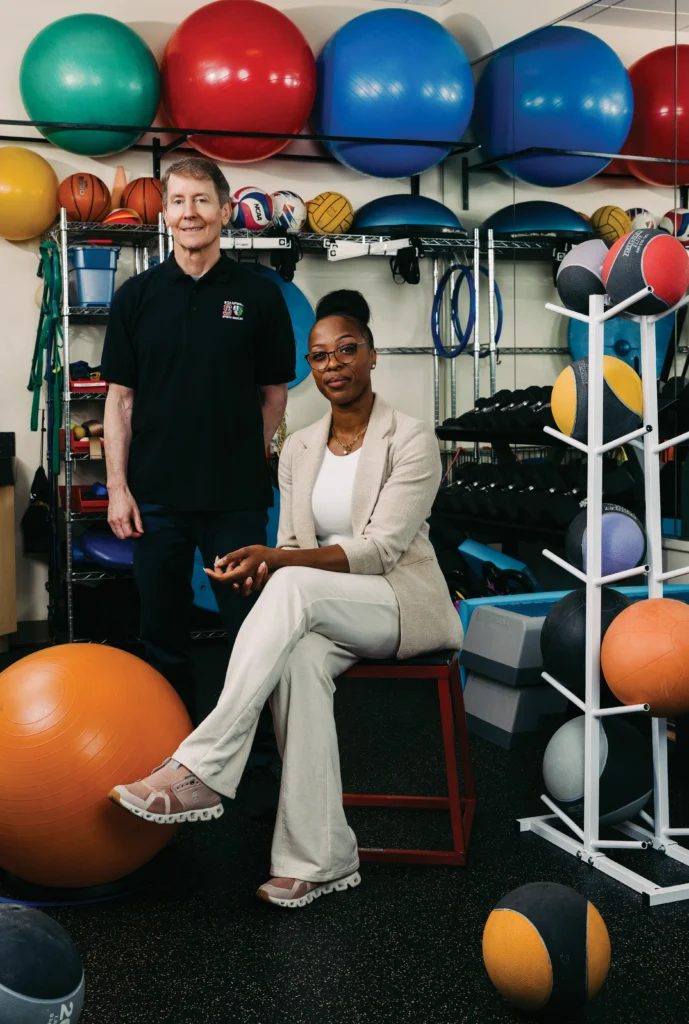
“Our training is on how to help people with an injury or disability to maximize their function,” he said. “And that’s really what we’re doing in sports medicine, too.”
Some adaptive sports injuries Fredericson and his colleagues treat are similar to those in broader sports medicine, like Barta’s overuse injury, but they might be more common or severe in athletes with impairments. For example, head injuries, already prevalent in certain team sports like soccer, are even more common in athletes with a visual impairment.
But other injuries are specific to athletes with disabilities. While athletes without disabilities are most likely to incur lower-body injuries, those who use wheelchairs are more prone to upper-body injuries, specifically shoulder injuries.
“Our training is on how to help people with an injury or disability to maximize their function.”
Michael Fredericson, MD, a professor of orthopaedic surgery
For paraplegic athletes, competing in hot weather can quickly become an emergency because they have difficulty regulating their body temperature and can miss the effects of overheating.
And those who use wheelchairs, prosthetics or other adaptive equipment can develop pressure sores where their bodies meet the engineered devices.
“Sports is a high-risk domain. As long as body parts are moving unpredictably, it’s a dynamic, sometimes chaotic system,” Tuakli-Wosornu said. “In Para sports, there are additional injuries related to anatomic nuances that are unique to athletes with impairments.”
Athletics at all levels
Fredericson runs a fellowship program that trains three medical fellows per year in sports medicine with hands-on training as physicians for the university’s sports teams. About a decade ago, he and the fellows established an adaptive sports clinic at the VA Palo Alto Health Care System.
The weekly clinic brings together physicians, recreational therapists, physical therapists, occupational therapists and psychologists to aid veterans with disabilities who want to participate in sports.
A lot of the clinical work involves matching their patients, who come in at all levels of sport, with accessible activities.
“Some of our vets are Paralympians; some of them don’t do any physical activity at all,” said Chantal Nguyen, MD, a clinical assistant professor of orthopaedic surgery who recently completed her sports medicine fellowship. “There’s no qualification of what an athlete is to use the clinic. The goal is to support them where they are.”
They might be an elite athlete in need of specific facilities to practice or a wheelchair user curious about local recreational wheelchair sports leagues. Nguyen and her colleagues are tapped into adaptive sports organizations in the Bay Area and around the nation and can help patients make connections.
Though the benefits of physical activity are well known, less than half of people in the U.S. with physical impairments report doing regular physical activity, as compared with about two-thirds of people without disabilities.
But for these patients, participation in recreational sports is not just a feel-good exercise; it provides other tangible nonphysical benefits.
In 2019, Fredericson led a review of studies examining how organized sports impact quality of life for people with disabilities. These studies show that participating in sports is associated with improved mood, friendships and sense of community belonging, as well as higher employment rates.
“They feel better physically, they have improved social interactions, they tend to stay healthier, they have better energy,” Fredericson said. “A lot of folks with disabilities are former athletes — and just knowing that you can still do that is really uplifting.”
More on adaptive sports
Barriers to entry
But taking part in adaptive sports is often not as simple as finding a team and signing up.
Nguyen is conducting a nationwide survey asking athletes with disabilities about their experiences with sports. The answers she has received and the conversations she has had with athletes at sports events for veterans with disabilities have been eye-opening for her.
One athlete told her that the only wheelchair-accessible bathroom was two miles from her event. Another athlete, who uses a catheter to urinate, said that the competitions provided no private place for her to change it. Athletes who use wheelchairs and need to fly to events said their specialized chairs often end up broken by the airlines.
Any one of these experiences can, understandably, put an athlete off from wanting to continue in their sport, Nguyen said.
“Then they stop physical activity altogether. Sports are often an opportunity to enjoy physical activity, and if you take that away, people might not want to do any other form of exercise,” she said. “If I didn’t talk to the athletes, I wouldn’t have realized these things.”
There are barriers at all levels and stages of adaptive sports that go beyond infrastructure issues at events. Ableism is deeply woven into our society, and sports are no exception. Many people with disabilities are made to feel — or explicitly told — that they can’t be athletes, said Tuakli-Wosornu.
“Sports are often an opportunity to enjoy physical activity, and if you take that away, people might not want to do any other form of exercise.”
Chantal Nguyen, MD, a clinical assistant professor of orthopaedic surgery
And opportunities to participate in adaptive sports are often few and far between. Tuakli-Wosornu was part of a 2024 study that found that only about 20% of NCAA Division 1 universities in the U.S. offer any kind of adaptive sport program, including recreational or club sports.
Perhaps because of all these barriers, disability representation in sports is also lacking. “You can’t be what you can’t see,” she said.
Tuakli-Wosornu and Nguyen are using their positions in the adaptive sports medicine world to continue pushing for better access and care for athletes with disabilities.
“If we want to make sports safer, we have to understand the perspective of the athlete before a person without disabilities starts making rules,” Nguyen said. “My goal is to listen to our athletes and to put as much emphasis on following safety regulations for our athletes with disabilities as we do for other athletes.”
From the track to the operating room
Barta’s experiences with medical care and competing as an athlete with a disability have spurred her career choices. As a bioengineering major, she conducted research on balance and gait in athletes at Stanford University’s Human Performance Lab.
In the fall, she’s entering a master’s degree program in engineering to focus on bone health as a Rhodes scholar at the University of Oxford. After that, she plans to return to the Stanford School of Medicine and specialize in orthopaedic surgery. She’s also training for the 2028 Summer Paralympic Games in Los Angeles.
Barta had 21 surgeries after her childhood accident and another when she broke her right foot two years ago. Those experiences inspired her to pursue medicine so she can be the kind of physician she wishes she had.
“I’ve had a ton of interactions with the medical field,” she said. “I’ve never had a female surgeon; I’ve never had a Division 1 athlete surgeon. I think I really would have benefited from a surgeon who knew intimately what it means to me to be an athlete and how central that is to my identity.”
Related story
- Yetsa Tuakli-Wosornu: Championing Equity in Sports and Medicine