

A pacemaker for the brain
Treating Parkinson’s by responding to the brain's rhythms in real time
Helen Bronte-Stewart, MD, a professor of neurology and neurological sciences, has spent two decades studying what goes awry in the brains of people with Parkinson’s disease. Recently, her work led to adaptive deep brain stimulation — a new technology to treat the disease.
Parkinson’s, a progressive neurodegenerative disorder, disrupts the brain’s ability to control movement, leading to slow movement, stiffness, tremors, and gait and balance impairment. These symptoms arise in part because certain brain regions develop abnormal rhythms of electrical activity. Since the 1990s, clinicians have used deep brain stimulation to deliver electrical pulses to the brain in hopes of restoring normal activity. But traditional systems deliver constant, around-the-clock stimulation to the brain, unable to adjust during sleep, changes in activity, or when a patient’s medication is kicking in or wearing off.
Working with medical device company Medtronic, Bronte-Stewart, the John E. Cahill Family Professor, led the development of adaptive deep brain stimulation — a system that works more like a cardiac pacemaker, continuously monitoring the brain’s electrical activity and adjusting stimulation immediately. Electrodes are implanted into areas of the brain affected by Parkinson’s disease and the wires attach to a small, battery-powered device on the chest that controls the system. The U.S. Food and Drug Administration approved the therapy in February 2025.
In this Q&A, we asked Bronte-Stewart to walk us through the innovation and its journey from lab to clinic
How does adaptive deep brain stimulation work?
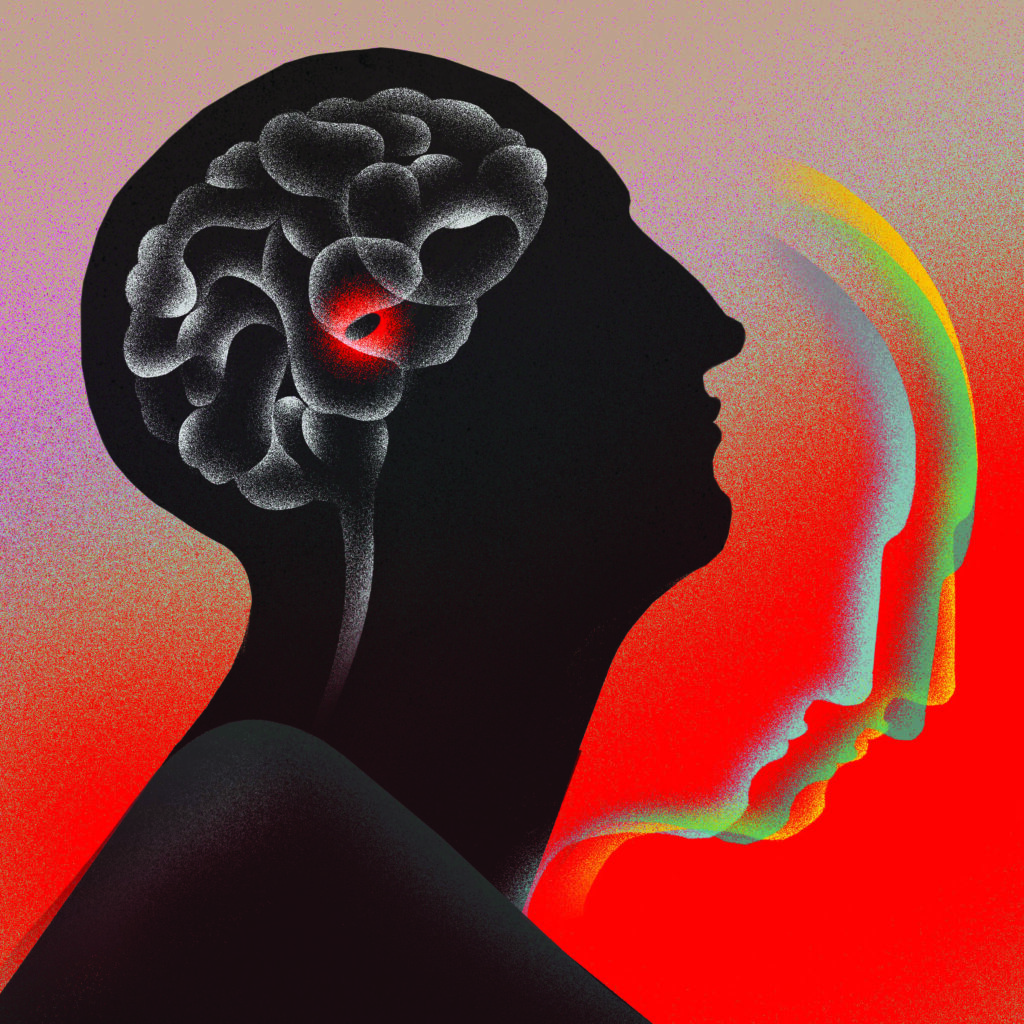
Think of it as a brain pacemaker. Traditional deep brain stimulation delivers constant electrical pulses 24/7, unable to sense what the brain is doing — like early cardiac pacemakers that couldn’t sense the heart rhythm. In Parkinson’s, a brain arrhythmia in the motor circuits jams the signals that result in normal movement. Traditional stimulation brings the brain arrhythmia down, but in a one-size-fits-all way with no feedback. Imagine taking two blood pressure medications but never measuring your blood pressure; you could end up too low or too high. That’s what happens with traditional deep brain stimulation. Adaptive stimulation, on the other hand, senses a person’s brain rhythms and adjusts in real time, delivering electrical stimulation only when needed and at just the right level.
What sparked the idea?
When I first started collaborating with Medtronic, we could deliver brain stimulation but we couldn’t listen to the brain in return. I remember going on a trip to visit their headquarters and they left a pamphlet in my hotel room about the history of cardiac pacemakers. I’ll never get those images of the earliest pacemakers out of my mind — people with wires leading to their chests from these huge carts of equipment. Just seeing the fortitude it took to develop today’s adaptive cardiac pacemakers encouraged me to keep trying with the brain. I kept thinking, we’re 10 or 15 years behind cardiology, but we can get there.
What key advance made this possible?
Two things came together. First, we had to figure out which brain signals actually mattered. My lab and others’ built tools to precisely measure movement, then synchronized those with brain recordings from patients doing complex tasks. That let us figure out which brain signals corresponded to which movements. Through a collaboration called the Brain Radio project, groups around the world built a data bank which ultimately revealed that one type of signal, called beta oscillations, could be used to most accurately monitor patients.
From there, it was the technology. Medtronic developed a sensing-enabled neurostimulator that could deliver stimulation and record brain signals continuously. Once we identified the key brain signals, we could start testing their adaptive device.
What was the toughest challenge?
One of the biggest challenges is getting clinicians to use deep brain stimulation in the first place. There’s been a disconnect going back decades. Early surgical procedures to treat Parkinson’s led to some bad outcomes, and so neurologists really shied away from them. Then, the incredibly successful drug levodopa came along in the late 1960s, and that whole surgical era just completely went away. When deep brain stimulation came back in the 1990s, I think some of that wariness among neurologists lingered. Many clinicians still don’t realize that deep brain stimulation is one of the safest neurosurgical procedures, and they wait too long to refer their patients. But as technologies like adaptive stimulation become available and word gets out about how well they work, that’s slowly changing.
How did you show it works and is safe?
Initially, we were doing all this work in the lab with research devices, so we were using the adaptive technology on patients only for short periods of time at once. I was working with Medtronic on a feasibility study that would tentatively take it a bit further, but then they found out the regulatory bodies in the U.S., Canada and Europe were all on board with getting this out to patients. So the company shut down the feasibility plan and went straight to a full international trial where we sent people home for 30 days with the device, brought them back, then sent them home for another 30 days. That was the ADAPT-PD trial, published in JAMA Neurology last fall. We enrolled 68 patients, and the results were really encouraging. The trial showed that adaptive stimulation was safe and provided comparable symptom control to traditional stimulation — the key was proving it worked just as well while people were at home going about their daily lives.
Where is it being used today?
It’s now approved in both the U.S. and Europe. Europe got approval earlier and really picked it up quickly — I heard from colleagues that some centers had multiple patients on it within weeks. In the U.S., it’s been available since the FDA approval in February 2025. Anyone with the Medtronic sensing-enabled system can now try it with their neurologist. It’s still early, but the adoption has been encouraging.
How has this impacted patients’ lives?
What I’m hearing from patients is this overall sense of feeling like their disease is being treated better. It’s hard for them to always pinpoint exactly why, but they report fewer side effects and more stability throughout the day. Some are noticing improvements in their most affected symptoms including tremors and sleep. The most telling thing is that 98% of patients who tried it in the trial chose to stay on it. That speaks to how well it’s working in people’s daily lives.
What’s next?
We’re just at the tip of the iceberg. We’re relying only on beta oscillations in these first adaptive devices, but there are other frequencies of brain signaling that we’re investigating now that might let us fine-tune and personalize brain stimulation even more. My lab is also moving into Parkinson’s and cognition — looking at new ways of stimulating the brain that could help with thinking and memory. There’s also potential for using this technology in other conditions like obsessive-compulsive disorder and depression. The key is that we’ve unlocked this door of having adaptive technology that uses brain signals to drive stimulation. That opens up a whole new world of research.
How does it feel to see this technology reach patients after two decades of work?
I tentatively predicted this would happen — that eventually residents and fellows would look at us in shock and say, “You what? You used to stimulate the brain without recording it?” But watching it become real has been joyful. We’ve gone from complex lab equipment to a system that’s just easy and normal; my students can pick up a tablet and intuitively figure out how to see a patient’s brain recordings and adjust the settings on a brain stimulator. Most importantly, this is out there in the world, helping people. That’s the best part.