

When childhood illnesses harm the bones
A pediatric researcher explains puberty’s critical window for bone development — and how chronic illness can slam it shut
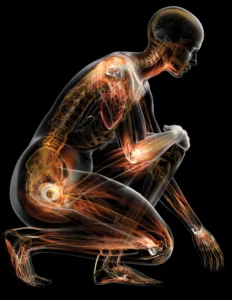
During puberty, kids’ bones fortify themselves at a furious pace, accumulating 40% to 60% of all the minerals they’ll ever have. That lifetime bank of bone-strengthening calcium protects against the bone loss of old age.
“Puberty is a real window of opportunity for boosting peak bone mass,” said Mary Leonard, MD, the Arline and Pete Harman Professor for the Chair of the Department of Pediatrics at Stanford Medicine. “But it’s also a window of vulnerability for kids with chronic disease. If you’re sick during those years of really fast growth, you’re going to miss it.”
Parents can protect growing skeletons by helping their children and teens get enough of the right nutrients — calcium and vitamin D are key — and encouraging weight-bearing exercise instead of screen time. But the situation is extra challenging if a chronic disease is added to the mix.
Chronic kidney disease throws calcium metabolism out of whack, for instance, and certain congenital conditions weaken muscles — yet healthy calcium levels and muscle strength are important partners in building strong bones. Other diseases require treatments with bone-damaging side effects: Think steroids for inflammatory conditions or radiation for cancer. In this Q&A, Leonard, the Adalyn Jay Physician-in-Chief at Lucile Packard Children’s Hospital Stanford, talks about her research on how chronic disease damages children’s bones. Unlike the elderly, “these kids are not losing bone,” she said. “They are failing to gain bone in the first place.”
Why do children need different bone care than adults?
Damage caused by chronic kidney disease is a good example.
In a healthy adult, bone-recycling cells dissolve old bone, while their partners, the bone-building cells, come in right behind to replace it. This bone remodeling maintains a steady balance, or, at older ages, a gradual loss of calcium.
The kidneys regulate calcium metabolism. When they’re working poorly, calcium leaches out of the bones into the blood. But physicians avoid giving calcium supplements to adults with kidney disease because these patients have accelerated calcification of their blood vessels. Doctors fear — with reason — that calcium supplements will speed calcification of the patient’s aorta, which can kill them.
But at the cellular level, kids’ bones are different. They need plenty of calcium — even if they have kidney disease. Kids are expanding their bones, making them wider and longer. The bone-building cells, osteoblasts, are on the outside of the bone, laying down lots of bone and using lots of calcium. Meanwhile the osteoclast cells that dissolve and recycle old bone are inside the lumen of the bone, hollowing it out so that it can expand without becoming too heavy. There’s more new bone built than old bone recycled, meaning net calcium uptake.
Healthy kids deposit about 50% of their bone mass during their teen years, meaning they experience a huge jump in needs for bone-building nutrients, especially calcium and vitamin D. They also need weight-bearing physical activity; the push and pull of muscles on bones generates crucial signals to build stronger bones. This is a key reason for parents to encourage their kids to get off of screens, because more screen time often means less time for exercise that strengthens kids’ bones.
We’ve studied children with chronic kidney disease. Those on a calcium supplement are much less likely to fracture. Just like other kids their age, they need enough calcium to build and protect their growing bones.
This means the way we manage bone health in adults with kidney disease is the opposite of what we need to do in children. Kids are not small adults.
What does the latest Stanford Medicine research reveal about building bone in sick kids?
The medicines we have for adults with osteoporosis block bone loss and keep calcium in the bones.
We don’t have any drugs for children who fail to gain bone in the first place. Our only strategy is treating their underlying disease. My lab has collaborated with several other teams to see if better treatment for chronic diseases strengthens kids’ bones.
One project focused on children with Crohn’s disease. They had terribly fragile bones because prednisone was administered to tamp down gut inflammation. But the steroid disrupts the balance between bone-building and bone-recycling cells, essentially inducing osteoporosis. When monoclonal antibody treatment — which leaves bones alone — became available for Crohn’s, we showed that kids treated with antibodies recover their bone health quickly. Within 10 weeks of starting antibody therapy, you see markers of bone mineralization taking off.
Another project I find really exciting focuses on cystinosis, a genetic defect in the metabolism of one amino acid, cysteine. Crystals of cysteine build up in the muscles, causing terrible muscle problems in these patients. The push and pull of muscles on bone drives bones to get bigger, so it’s not surprising that our team found very poor bone density in kids with cystinosis.
Stanford Medicine has one of only two sites in the country where gene therapy is being tested for cystinosis. I am very hopeful that treating patients’ muscle problems with gene therapy will also strengthen their bones.
How do you prioritize bone health when a child is battling a serious illness?
It’s such an important question. When I first started working with our stem cell transplant experts who treat cancer patients, they said, “We’re just trying to get these kids to survive.”
Stem cell transplants are lifesaving, but we found that long-term survivors had small, fragile bones and very little muscle. Patients who received total body irradiation before their transplants were worst off by far, with some experiencing vertebral compression fractures as young adults. Those fractures, during which the spine collapses and patients lose height, usually happen in elderly people — but this was happening in early adulthood.
Stanford Medicine researchers are studying how to prepare patients for stem cell transplant without radiation. We think that approach may prevent these terrible bone complications.
In general, we have much better treatments for serious and chronic childhood diseases than in the past. Many more kids survive cancer and have decades of life ahead of them, for example. We don’t want them having spine or hip fractures when they’re in their 20s.
So, why worry about bones? Because it’s our job as pediatricians not just to tackle the immediate problem but also to send young people into adulthood as healthy as possible.
