

Innovation in bloom
How curiosity, collaboration and public funding grew into a lifesaving therapy

Jack Gardella was 21 and a senior in college when a visit to Stanford Medicine revealed he had a serious heart condition. Overnight, his perception of his health altered. “Obviously, it’s not great news,” Gardella, now 31, said. But he was young and healthy and had no symptoms at the time.
As the years passed, that began to change. The fifth-generation cattle rancher living near a small town in the foothills of the Sierra Nevada became fatigued during routine work or hiking.
“Ninety percent of the time, when I walked up a hill, or stood up suddenly after lying down, I would feel my heart laboring,” Gardella said. During his regular checkups at Stanford Hospital, Gardella learned of a possible drug treatment for his condition, called hypertrophic cardiomyopathy.
Why it matters
- One in 500 people have hypertrophic cardiomyopathy, a major cause of heart failure.
- A new drug provides the first precision therapy for the condition.
- The drug came about as a result of curiosity-driven studies of the interactions of the two main molecules involved in muscle contraction.
People who have this condition, in which the heart beats too forcefully, experience a thickening of the interior wall of the heart’s left ventricle — the main pumping chamber that circulates oxygenated blood throughout the body. This thickening worsens over time, causing the heart to pump less effectively and may even block the flow of blood out of the heart.
About 1 in every 500 people in the United States are thought to have hypertrophic cardiomyopathy. Some have symptoms similar to Gardella’s. But the disorder can also be silent; it’s the leading cause of sudden cardiac death in young people. Gardella was lucky to be diagnosed early.
“I was always hopeful, but it also seemed a little pie-in-the-sky,” Gardella said of the potential treatment. But in March 2024, his doctor told him he was a candidate to try the newly approved drug, called mavacamten. Within two weeks Gardella, a father of two young children, noticed a significant improvement. “I feel a lot better. I am not short of breath, and I can stand up from playing with my kids on the floor without getting lightheaded. I’m thrilled,” he said.
“Mavacamten has been the single largest therapeutic advance for this group of patients — really since ever,” said Victoria Parikh, MD, director of the Stanford Center for Inherited Cardiovascular Disease and an associate professor of medicine. “We’ve never had a precision therapy for hypertrophic cardiomyopathy until now, and patients often feel better almost immediately.”
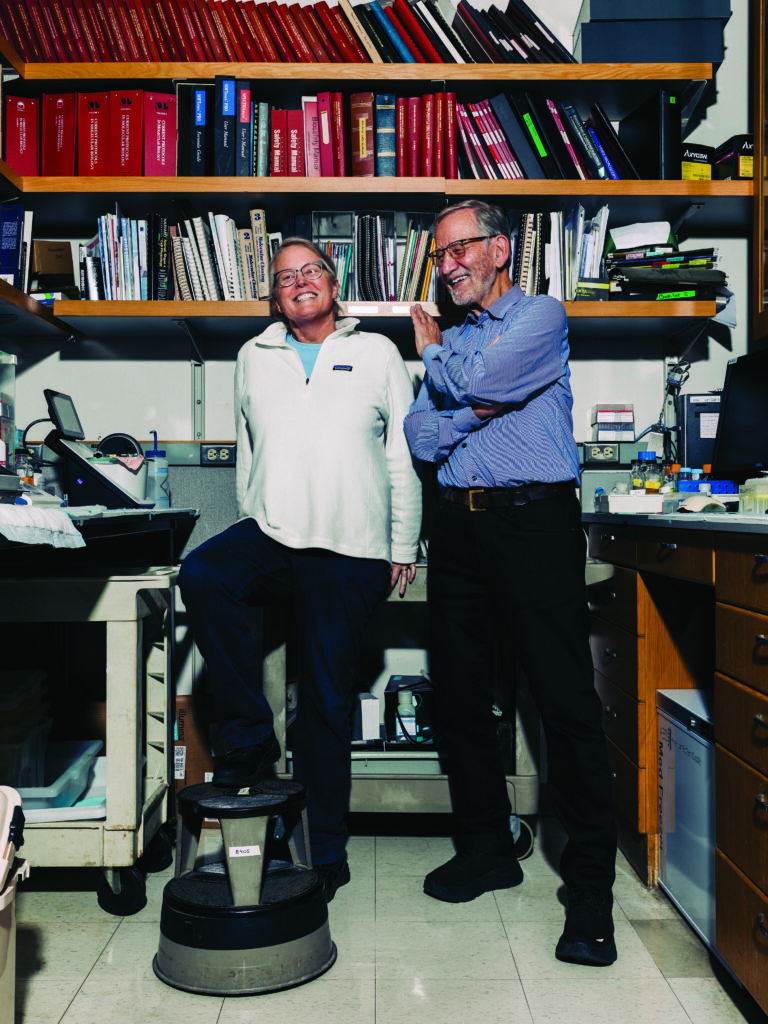
Mavacamten didn’t spring into being overnight, however. It’s the result of more than five decades and millions of dollars of publicly funded research, primarily in the laboratory of James Spudich, PhD, a professor of biochemistry, emeritus.
Spudich, who received his PhD from Stanford University in 1968 under the tutelage of Nobel laureate Arthur Kornberg, MD, has dedicated his career to understanding the molecular intricacies of how myosin, the molecular motor that drives cell division and multiple other forms of movement in all cells, converts chemical energy into mechanical motion.
Much of his work has focused on how muscle fibers contract to move our limbs, breathe in air and pump blood throughout our bodies. Spudich’s research has been continuously supported by the National Institutes of Health for 55 years, with a five-year renewal grant starting in March 2026.
Related content
Bridging the gap: Resources that accelerate the path from discovery to treatment
From the archives
Dream weaver: An image of a mesa that came to a scientist in his sleep sparks insight into a deadly heart disorder
Inside help: Stanford researchers launch a massive study of lung tissue — healthy and diseased — in one of their own
Revealed: The molecular mechanism underlying hypertrophic cardiomyopathy
That body of work has paid off in the form of mavacamten, the first drug that attacks the cause of the heart’s malfunction rather than simply mitigating symptoms.
Since its approval by the Food and Drug Administration in 2022, mavacamten has been prescribed thousands of times, giving people like Gardella their lives back.
“It is like the clouds have lifted,” Parikh said. “We’ve seen hearts responding in a way we had never seen before — patients hiking, running, climbing mountains. They are living full lives again.”
The drug’s development is just one striking example of how the power of research lies not only in sudden leaps forward but also in the long, patient accumulation of knowledge — much of it built through curiosity-driven, publicly funded inquiry with no immediate guarantee of clinical payoff. It is also a reminder that scientific progress depends on researchers who are willing and able to pursue difficult problems over years or decades, and on critical support from organizations like the NIH.
A vast tapestry of scientific effort, collaboration and sheer tenacity is required to turn a metaphorical twinkle in a test tube into a drug that can improve or even save lives — but even more is needed. Success also hinges on established pathways to move discoveries from academic laboratories to venture capital-supported biotech companies that can advance, test and manufacture potential therapies. In short, curiosity, teamwork and funding mechanisms must converge to push medicine forward.
With curiosity as his guide
Spudich didn’t set out to develop a blockbuster heart drug. But his unusual (at the time) focus on multidisciplinary training during the late 1960s and early ’70s gave him an extraordinarily strong foundation in biochemistry, genetics and structural biology, and this allowed him to meticulously study the interactions of the two main molecules involved in muscle contraction — actin and myosin — at the nanometer level (1 billionth of a meter, or about 1/100,000 the width of a human hair).
Over the decades his lab purified the proteins and studied them from every angle to ascertain exactly how they work. Along the way he founded three companies and raised tens of millions of dollars in venture capital to move his findings out of the lab and into the clinic. But his original studies were decidedly unrelated to drug discovery.
“The model organism I settled on in 1971 was an amoeba called Dictyostelium, which is so far flung from what might today be considered important for drug discovery that it would likely be difficult to receive government funding now,” Spudich recalled. “I chose it because there was the potential of conducting genetic experiments. And it was a really good organism for growing in large numbers, which is important when trying to obtain purified proteins for biochemical study.”
Also known (inaccurately, as it is not a fungus) as slime mold, Dictyostelium lives in damp, organic-rich soils, chowing down on a wide variety of soil-dwelling bacteria. It had much to recommend it as a model organism for studying muscle mechanics. It’s a eukaryote — that is, an evolutionary step up from bacteria and the class shared by all higher organisms including humans.
It also has a unique life cycle — able to exist as either a single-celled or multicelled organism. When the supply of bacteria to munch on grows sparse, many thousands of single-celled Dictyostelium migrate toward one another to form a multicellular slug-type conglomerate, which travels to the soil surface before differentiating into what’s called a fruiting body for better dispersal to new environs and eventual survival.
All that moving around requires muscle. Well, not muscle exactly, but well-orchestrated movements of the cell’s internal scaffolding — called the cytoskeleton. These movements are powered by the same duo of proteins, called actin and myosin, that trigger the contraction and relaxation of human muscles throughout the body, including the heart.
“Mavacamten has been the single largest therapeutic advance for this group of patients — really since ever.”
Victoria Parikh, MD, an associate professor of medicine
For the first years of his Stanford career, Spudich and members of his lab threw themselves into identifying and purifying myosin and actin in Dictyostelium and studying their function — harking back to his time as a graduate student in Kornberg’s laboratory.
That’s when the researchers stumbled onto something that made Dictyostelium even more powerful as a model organism.
“A graduate student in my lab at the time accidentally discovered — to the shock of everyone in the field — that it is possible to swap out the myosin gene in Dictyostelium through a process called homologous recombination,” Spudich said.
“So, we could make cells that were lacking functional myosin and replace it with genes for mutated forms of the molecule and observe the outcome. It was a very powerful combination of biochemistry and cell biology that is not done much today, because it’s difficult to get funding for such model systems even though they are often uniquely amenable to such approaches.”
Mutating the myosin motor
Enter Kathy Ruppel, a senior research scientist who came to Spudich’s lab in the late 1980s as part of her doctoral studies as an MD/PhD student.
Helpfully, Dictyostelium lacking myosin didn’t die; they just couldn’t divide when grown in liquid-filled test tubes. Instead, they morphed into large cells with multiple nuclei. That enabled Ruppel to clearly assess the effect of multiple mutations in what the Spudich lab had just shown was the motor domain of the myosin molecule — its head.
Researchers hypothesized from studies in the 1950s and ’60s that muscle movement occurs when thick filaments of myosin II, a molecule with two heads and a ropelike tail, slide past neighboring actin-containing thin filaments.
Contraction was proposed to occur when the myosin heads latch onto nearby actin filaments and, like teammates in a game of tug-of-war, pull in unison to shorten the fiber, called a sarcomere. The energy for this action comes from breaking a chemical bond in a small molecule called ATP.
“We could take out the myosin that the Dictyostelium needed to divide and replace it with different forms of mutant myosin and see which versions could rescue the defects,” Ruppel said. “That was the first systematic study of how mutations in myosin affect motor function. We didn’t have a sense that we were working on something that could be translated into clinical use. It was really just curiosity about how this motor turns ATP hydrolysis into movement and force, and we started to understand this well.”
“Watching the actin filaments move across the myosin-coated glass at the same rate they move when your muscle contracts was a total wow moment. It blew everyone’s mind. It transformed everything.”
James Spudich, PhD, a professor of biochemistry, emeritus
In 1990, shortly after Ruppel arrived in Spudich’s lab, researchers at Harvard studying familial hypertrophic cardiomyopathy discovered that affected members of a large family spanning several generations all had a specific mutation in their myosin gene — a tiny, single-nucleotide change in the DNA sequence. It was the first inkling that myosin function was a key component of cardiomyopathies.
But the Dictyostelium myosin was too different from the human version to test the effect of these mutations directly. And the human version of myosin important in cardiac function, called beta cardiac myosin II, was notoriously impossible to make in the laboratory.
Lacking human myosin to study, the researchers in Spudich’s lab further refined their understanding of the myosin motor during the 1990s, developing a way to precisely measure the movement of actin filaments across a lawn of rabbit skeletal myosin molecules affixed to a glass slide, and — working with Stanford Medicine Nobel laureate and physicist Steven Chu, PhD — designing a laser trap to measure the force of movement and length of displacement of actin due to the breakdown by myosin of a single molecule of ATP.
“This is the power of the reductionist approach,” Spudich said. “Watching the actin filaments move across the myosin-coated glass at the same rate they move when your muscle contracts was a total wow moment. It blew everyone’s mind. It transformed everything.”
Their experiments were a tour de force in the field of muscle biology, identifying the power and distance that one stroke of one myosin motor produces. Finally, the molecular minutia of muscle movement had been revealed.
Drugging the sarcomere
“At the time, I did not contemplate becoming involved in the world of biotechnology,” Spudich recalled in a 2024 review article in Frontiers in Physiology.
But in 1995, he was asked to join the discovery board of SmithKline Beecham Ltd., now GSK plc. Spudich lobbied heavily for new drug pipelines targeting the cytoskeleton for cardiac diseases and cancers, but the company had other priorities. In 1998, Spudich and several colleagues launched Cytokinetics to pursue cytoskeletal-based therapies — primarily looking for ways to ramp up cardiac myosin activity to combat heart failure.
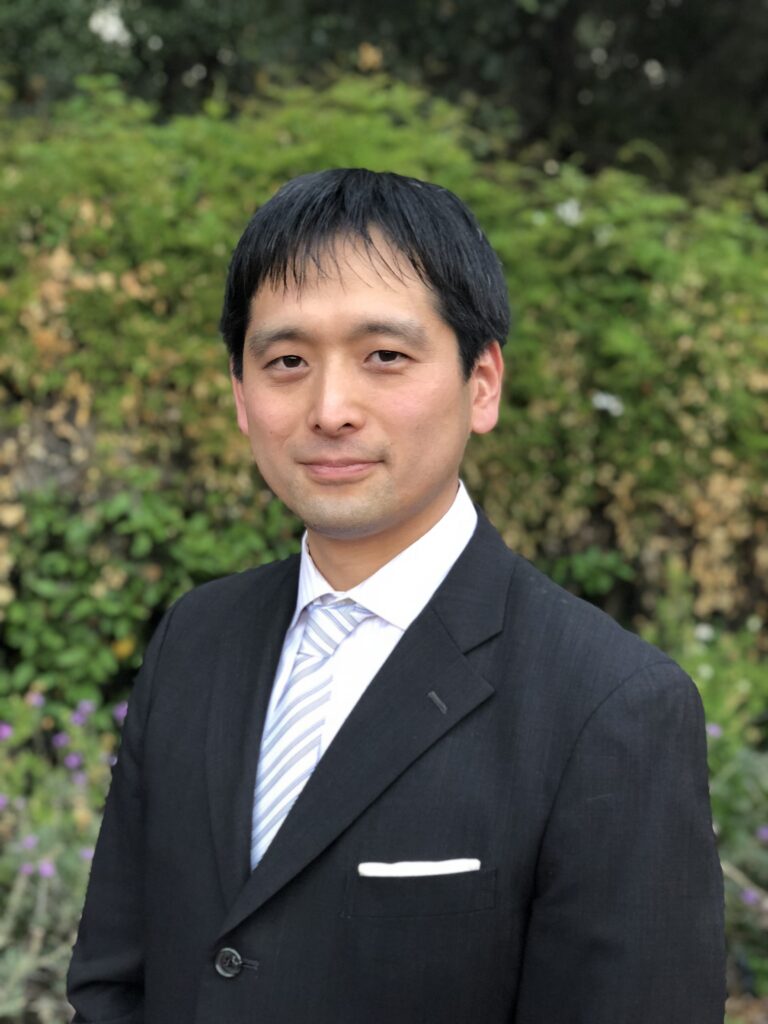
“Jim had this idea for a very long time — that you could drug the sarcomere,” said a former postdoctoral scholar in the Spudich lab, Masataka Kawana, MD, now an assistant professor of cardiovascular medicine and the medical director of the Ambulatory Heart Failure and Cardiomyopathy Service at Stanford Medicine. “But to do that you had to understand human cardiac myosin with absolute precision. No shortcuts.”
Eventually, in 2010, researchers at the University of Colorado, Boulder, cracked the code of expressing human beta cardiac myosin II, and Ruppel, after clinical training as a pediatric cardiologist at Stanford Medicine, Harvard and the University of California, San Francisco, returned to Stanford to join Spudich to turn their joint lab’s laser focus onto understanding what goes amiss in hypertrophic cardiomyopathies like Gardella’s. Kawana joined soon thereafter to round out the team.
“You can’t do precision medicine without precision science.”
Masataka Kawana, MD, assistant professor of cardiovascular medicine
In 2012, Spudich and three others in the field launched another company, MyoKardia Inc., to focus solely on developing drugs targeting myosin’s role in hypertrophic cardiomyopathy, raising nearly $40 million in venture capital within months.
But the researchers at the company and in Spudich’s lab quickly ran into a conundrum: The myosin mutations known to be associated with the inherited versions of the disease didn’t substantially and consistently increase the intrinsic force a single molecule produced, the velocity of its movement or the rate of ATP breakdown, any of which could account for hypercontractility.
“So we knew something was wrong with the model,” Spudich said. After months of contemplation, the answer came to him in a dream in 2014: The disease-associated myosin mutations weren’t changing how the molecule functioned, but they increased the number of myosin heads available to latch onto the actin filaments. Like in a mismatched game of tug-of-war, the overall force of the contraction increased substantially with more enthusiastic participants.
Researchers at MyoKardia promptly began tinkering with small molecules identified and licensed from Cytokinetics for their ability to inhibit myosin. They struck gold. Chemically altering the twist of one of these molecules gave them an excellent inhibitor of the mutant myosin’s function. “Little did we know that a decade later the molecule which we had in hand within the first six months of incorporating the company would prove to be the clinical lead molecule, and then the very molecule that the FDA approved …,” Spudich recalled in the 2024 Frontiers in Physiology article.
The molecule, which became mavacamten, worked by taking myosin molecules out of play, nudging some of the overactive myosin heads back into the “off” state — reducing the power of the heart’s contractions to more normal levels. As the team at MyoKardia worked through preclinical experiments of mavacamten in mice and then in human clinical trials, big pharma took note. In 2020, Bristol-Myers Squibb Co. bought MyoKardia. In 2022, mavacamten was approved for use in humans.
Vaulting the Valley of Death
Mavacamten’s rapid success is not the norm. Only about 10% of drug candidates entering clinical trials clear all the hurdles to become an approved drug. For Ruppel and Kawana, it crystalized the importance of basic research in drug development.
“It’s really amazing,” Ruppel said. “We were able to go from understanding the basic science to making an educated guess, ‘Well, if this is the problem, if we tweak this, it may help,’ and then to see that be borne out in a relatively short amount of time.”
All told, the development of the drug required an investment of about $1 billion — far beyond what an academic institution can wager on an unproven drug.
“It was very meaningful to me to be involved in the mavacamten clinical trials at Stanford Medicine as a clinician,” Kawana said. “I studied this drug in the lab, adding it to my experiments and learning how it worked at a very basic level. And now I’m prescribing this to patients in the clinic and witnessing their improvement. We were only able to do these studies because Jim studied the Dictyostelium myosin for decades. You can’t do precision medicine without precision science. Understanding myosin at the molecular level — down to a single amino acid — is what let us build a drug that treats the true cause of hypertrophic cardiomyopathies, not just the symptoms.”
Parikh noted that the center now has more than 150 patients on mavacamten. “It’s empowering for patients and for us,” she said. “We’d been spending years just trying really hard to use what we had, which was a sort of mismatched collection of drugs, to a situation where it is just very clear that these hearts are responding in ways we’ve never seen before.”
Patients like Gardella may soon have yet another option: A drug developed by Spudich’s first company, Cytokinetics Inc., was recently approved by the FDA for treatment of the same condition. The drug, aficamten, works similarly to mavacamten, reducing the number of myosin heads bound to actin. But aficamten leaves the body more quickly, which may allow finer tuning of dosages and more precise control of contractility.
In 2019, Spudich, his wife, Anna Spudich, PhD, Ruppel and two former postdocs, Darshan Trivedi, PhD, and Suman Nag, PhD, co-founded Kainomyx Inc. to target the malaria parasite by disrupting its cytoskeleton.
“Unlike MyoKardia, which garnered hundreds of millions of dollars from investors and pharmaceutical companies, venture capitalists don’t want to fund malaria research,” Spudich said. “We have some very good drug candidates. We’re not going to make a nickel, but we feel we owe it to society. We’ve never been in this for profit, but it is gratifying to transfer basic research knowledge to medicines.
“It’s unbelievable, and something I never imagined,” Spudich said of the trajectory of his research career. “I am so lucky to have lived so long and to have seen this very basic, almost esoteric biochemistry and biophysics research end up helping patients left and right, who are saying, ‘This is transformative for me.’ None of this would have been possible without NIH funding for basic research.”
Spotlight on Victoria Parikh
Associate professor of medicine (cardiovascular medicine)

Parikh runs the Stanford Center for Inherited Cardiovascular Disease, where she cares for patients and researches the genetic basis of cardiomyopathies. She is also the vice chair for strategy and innovation in the Department of Medicine — focusing on ways to implement precision medicine.
- Received her undergraduate degree from Stanford University in 2005 and her medical degree from Stanford in 2011.
- Spent her Thanksgiving break hiking to Tiger’s Nest monastery in Bhutan.
- Loves live music — most recently saw Lord Huron, the Preservation Hall Jazz Band and the Stanford University Singers.
- Favorite authors are Patrick Radden Keefe and Jhumpa Lahiri.
In her words: “I am researching these diseases to change the way people feel and help them live the lives they want to live. But the reality is that until now, it’s been 95% perspiration and 5% celebration. We just didn’t have the medications to target the cause of the problem. Mavacamten has really shifted that balance in favor of celebration. Now it’s exciting to go to clinic thinking, ‘I’m going to help somebody today with a really cool drug.’”
