


Your microbiome may be aging your brain
Scientists find a link in mice between gut bacteria and age-related cognitive decline

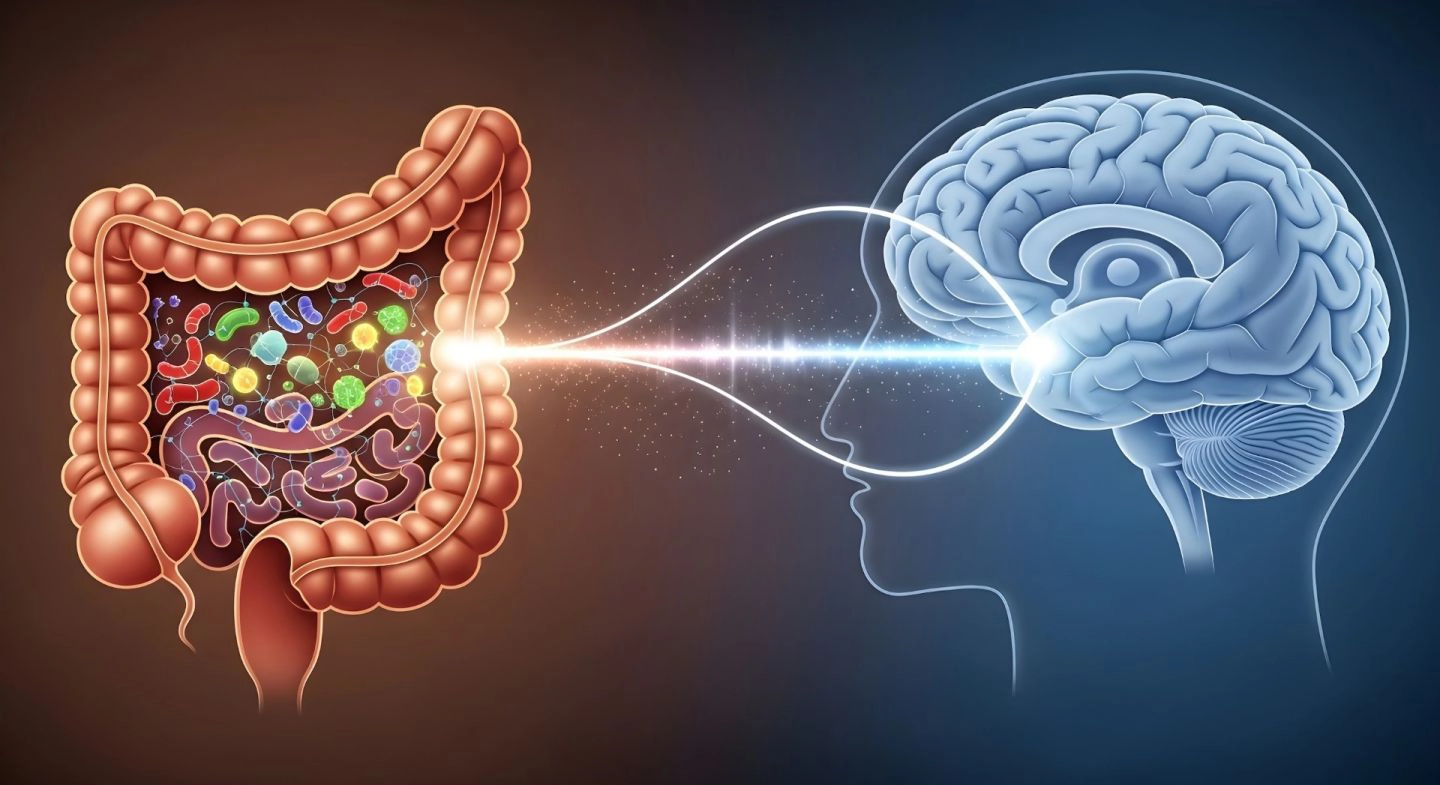
The sight of a delectable plate of lasagna or the aroma of a holiday ham is sure to get hungry bellies rumbling in anticipation of a feast to come.
We’ve all experienced the sensation of “eating” with our eyes and noses, but much less is understood about the information superhighway, known as the vagus nerve, that sends signals in the opposite direction — from your gut straight to your brain.
These signals relay more than just what you’ve eaten and when you are full. A new study in mice from researchers at Stanford Medicine and the Palo Alto, California-based Arc Institute has identified a critical link between the bacteria that live in your gut — your gut microbiome — and the cognitive decline that often occurs with aging.
“Although memory loss is common with age, it affects people differently and at different ages,” said Christoph Thaiss, PhD, who shared co-senior authorship of the study, published in March 2026 in Nature, with Maayan Levy, PhD. “We learned the timeline of memory decline is not hardwired; it’s actively modulated in the body, and the gastrointestinal tract is a critical regulator of this process.”
Thaiss and Levy are both associate professors of pathology and investigators at the Arc Institute.
To test their theory that the gut microbiome plays a role in our “senior moments,” the researchers housed young (2-month-old) mice with old (18-month-old) mice. Living (and pooping) in close proximity caused the microbiomes of the young mice to more closely resemble those of the older mice.
When the researchers compared the mice’s ability to recognize a novel object or to find the exit in a maze, the young mice with “old” microbiomes performed significantly more poorly than their peers — showing less curiosity about the unfamiliar object and bumbling about the maze.
Strikingly, treating these mice with antibiotics for two weeks restored their cognitive abilities, causing them to avidly explore unfamiliar objects and zip through the maze, as well as their control peers. The findings may extend to humans.
“Our study emphasizes that processes in the brain can be modulated through peripheral intervention,” Levy said. “Since the gastrointestinal tract is easily accessible orally, modulating the abundance of gut microbiome metabolites is a very appealing strategy to control brain function.”
