
What’s so special about ginger cats?
Scientists track down the surprising mutation that makes domestic felines orange
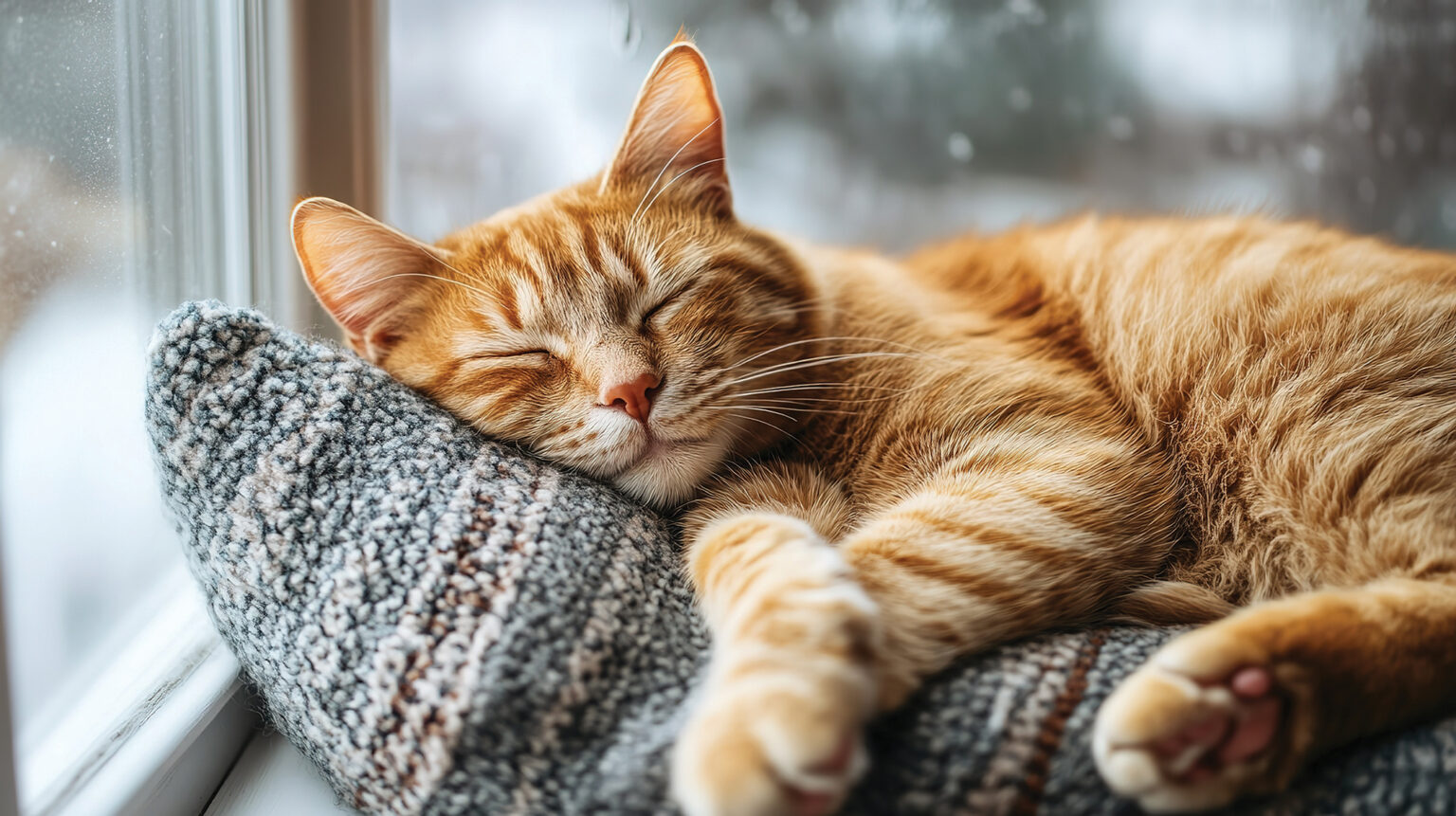
In a new study, Stanford Medicine researchers discovered the long-posited but elusive genetic mutation that makes orange cats orange — and it appears to occur in no other mammal.
Many mammals come in shades of orange — think tigers, golden retrievers, orangutans and red-headed humans — but only in domestic cats is orange coloration linked to sex, appearing much more often in males.
“In a number of species that have yellow or orange pigment, the causal mutations almost exclusively occur in one of two genes, and neither of those genes are sex-linked,” said Christopher Kaelin, PhD, senior scientist in genetics and lead author of the study published in May 2025 in Current Biology. Greg Barsh, MD, PhD, emeritus professor of genetics and of pediatrics, is the study’s senior author.
While scientists have pinpointed the typical mutations in other mammals that induce pigment cells to produce yellow or orange pigment instead of the default black or brown, they had only a rough idea of the location in cats: They knew from the preponderance of male orange cats that the mutation — dubbed sex-linked orange — was somewhere on the X chromosome. (As in most mammals, females have XX while males have XY sex chromosomes.) Any male cat with sex-linked orange is entirely orange, but a female cat needs to inherit sex-linked orange on both X chromosomes to be entirely orange — a less likely occurrence.
In the new study, researchers looked for variants on the X chromosome found in orange cats but not in non-orange cats. The most likely candidate was a variant that increased the activity of the Arhgap36 gene.
Arhgap36 is normally expressed in neuroendocrine tissues, where increased activity is associated with tumors. “The mutation in orange cats turns on Arhgap36 expression in pigment cells, where it’s not normally expressed,” Kaelin said.
This rogue activity inhibits a step in the same molecular pathway that controls coat color in other orange mammals. Besides a marmalade coat, could sex-linked orange be responsible for orange cats’ reputation as friendly agents of chaos? “The expectation, based on our current observations, is the mutation specifically affects color,” Kaelin said, adding that orange cat behavior remains a tantalizing mystery ripe for rigorous investigation.
Read the full story here.