Beyond the known
Discoveries about the genome’s ‘dark matter,’ dancing DNA and the colon’s nervous system are opening new doors in science

When Dan Jarosz, PhD, set out to study genetic mutations in yeast, he didn’t expect to uncover principles that could help predict human disease. But by analyzing a large family tree of yeast, Jarosz — a professor of chemical and systems biology and of developmental biology — was able to show how molecular changes in unstressed yeast cells could forecast how the cells would behave when faced with challenges.
It suggests that the same could be done in humans: assemble detailed blueprints of healthy cells to predict how those cells may respond to diseases or drugs.
“We found way more than we initially expected,” said Chris Jakobson, PhD, a postdoctoral scholar in Jarosz’s lab who led the new work, published in Science in October 2025.
“Following our nose, we got to places we didn’t expect when we started.” That’s precisely the point, according to Jarosz, who serves as senior associate dean for basic sciences at Stanford Medicine.
“Basic research is about following curiosity wherever it leads,” he said. “We’re investigating fundamental questions about how biology works, and the insights that come out can have the most unexpected implications.”
Why study yeast? Or ponder the repetitive regions of DNA once dismissed as “junk”? Or track how molecules move inside living cells? These questions might seem far from medicine, but they exemplify how discovery happens — by uncovering biological principles that could lead to entire new fields of study.
The researchers profiled here share Jarosz’s commitment to discovery-driven science. They’re decoding the “dark matter” of our genome, watching DNA fold and mapping the neurons that wrap around the colon. None set out to solve a specific clinical problem. Instead, they’re driven by curiosity and the desire to build foundational knowledge; it may take decades to reveal its full impact.
“There are only two kinds of basic biology,” Jarosz said. “Those that are useful in medicine now and those that might be useful in medicine someday.”
Discovery
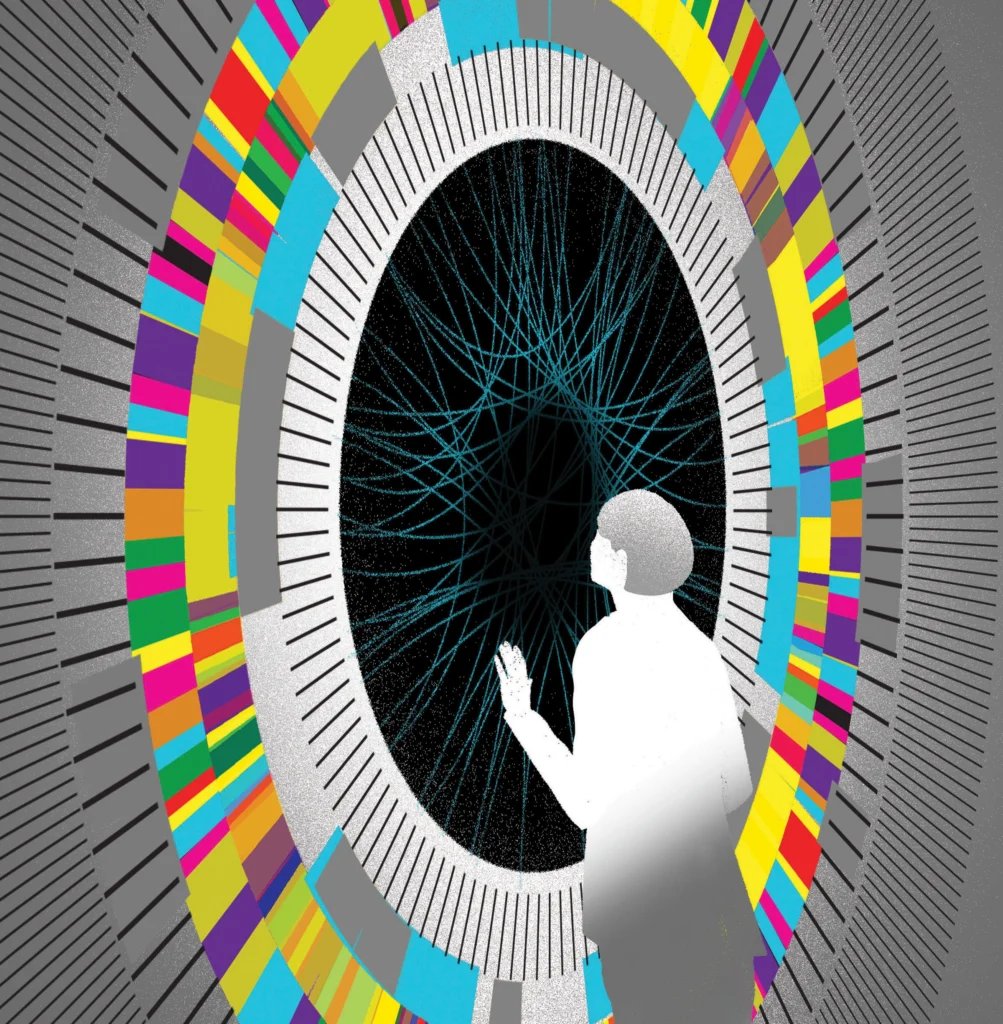
The genome’s ‘dark matter’
Repetitive DNA sequences once dismissed as junk may regulate how cells grow