

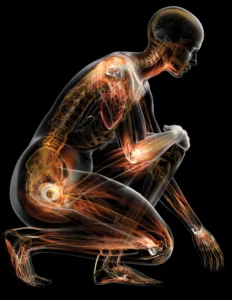
The hidden life of bones
Osteoblasts and osteoclasts rebuild bone throughout life
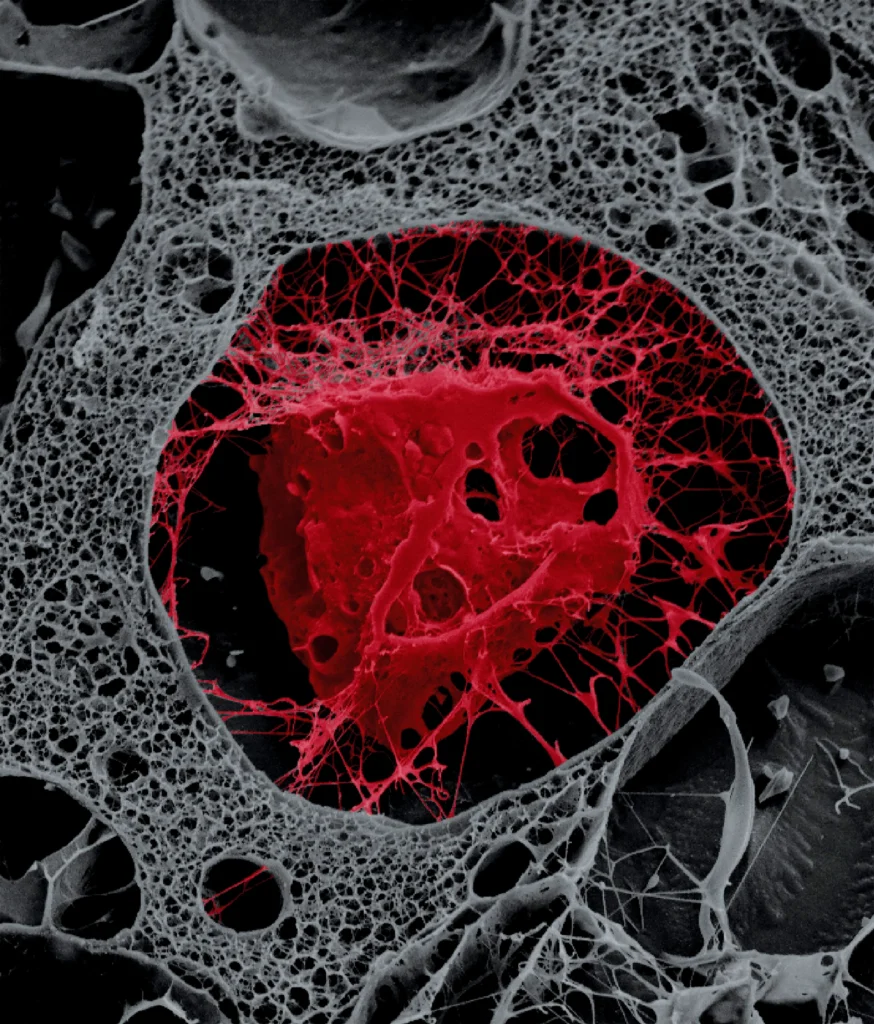
Our skeletons may seem static, but they’re quietly animated throughout our lives, with every bone in our bodies under constant (re)construction.
Two specialized types of cells, called osteoblasts and osteoclasts, are responsible for bone assembly and recycling. Physiology teachers tell their students that “osteoblasts build bone, and osteoclasts chew up bone” to help them keep the roles of the cells straight.
To begin building, the osteoblasts manufacture a frame. They lay
down many long strands of collagen. This ropelike triple helix is the body’s strongest protein. Most collagen ropes run parallel to the length of the bone, with a few cross-linking connectors between strands. We don’t understand how the osteoblasts know this pattern, but it’s as firmly programmed into them as a web’s radial geometry is into the orb spiders dangling outside your window.
When the matrix is ready, the osteoblasts pull calcium and phosphorus from the blood, which react with each other and harden into the bone mineral called hydroxyapatite. Bone gets its strength from both the tensile properties of the collagen and the compressive strength of the mineral, meaning it can flex and stand up to heavy loads.
When a bone needs rebuilding or reshaping, the bone-chewing osteoclast cells seal themselves to its surface, making a pocket under their bellies into which they secrete acid and enzymes. The acid dissolves bone mineral, releasing calcium and phosphorus into the blood; the enzymes break down collagen.
The resulting bone indentations have the romantic name “Howship’s lacunae,” after the British anatomist and surgeon who first identified them in the early 1800s.
In adults, whose bones are remodeling, the two processes happen in a tight tango: The osteoclasts chew up old bone, and the osteoblasts build new bone right behind them. This eliminates micro-fractures and keeps bone healthy.
How children’s bones grow
In kids, the cells work at different times and places: Osteoblasts put up new scaffolding and add mineral on the outside surface of the bone, making it thicker and longer.
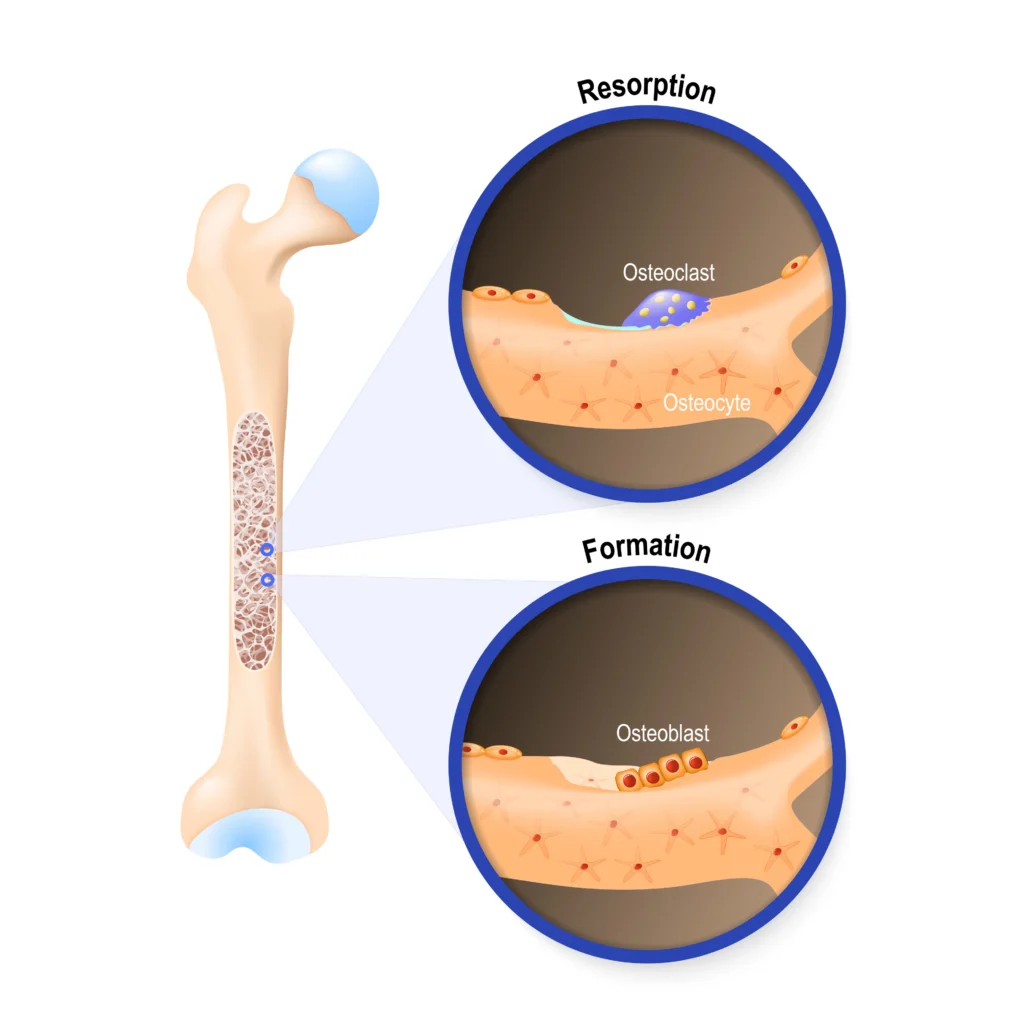
Osteoclasts then hollow out the inside of the bone, enabling it to expand without getting too heavy. This decoupled process enacts a transformation from the tiny tibias and fibulas of babies and toddlers into the grown-up-sized bones of teens.
Depositing plenty of bone mineral in early life, especially during the growth spurt of puberty, provides a bulwark against the bone loss of old age and protection against painful fractures from osteoporosis. Kids’ calcium requirements jump around age 11, reflecting their bone-building needs.
While the osteoblasts and osteoclasts are building and chewing, they’re also listening to a complex network of signals from other parts of the body, including the push and pull of muscles — a major stimulus for making bones stronger — and hormones from the kidneys and parathyroid and thyroid glands, which regulate the body’s calcium balance. More weight-bearing exercise is good for everyone’s bones, and that’s especially true in children and teens.
Several fundamental discoveries about bone development and repair have been made at the Stanford Medicine labs of Michael Longaker, MD, the Deane P. and Louise Mitchell Professor in the School of Medicine, and the late Charles Chan, PhD, stem cell researcher and assistant professor of surgery, including:
- The first identifications of skeletal stem cells in mice and in humans, published in 2015 and 2018, respectively. Skeletal stem cells differentiate into the mature cells needed to keep bones healthy, including osteoblasts and osteoclasts.
- The discovery, in 2021, that fracture sites in older bones have fewer skeletal stem cells than fractures in young bones, which helps explain why aging impairs bone healing. This research also identified small molecules that may work as drugs to help old bones heal faster.
- The finding, in 2025, that there are four major subpopulations of human skeletal stem cells, and that imbalances between the four types contribute to genetic diseases that impair bone development and to age-related problems with bone healing.
So, even though they seem unyielding, as sturdy as the I-beams in a skyscraper, our bones are actually complex communities in a constant state of flux. And that’s a good thing.
