Twirling to treat stroke
How a spinning device shrinks blood clots in the brain
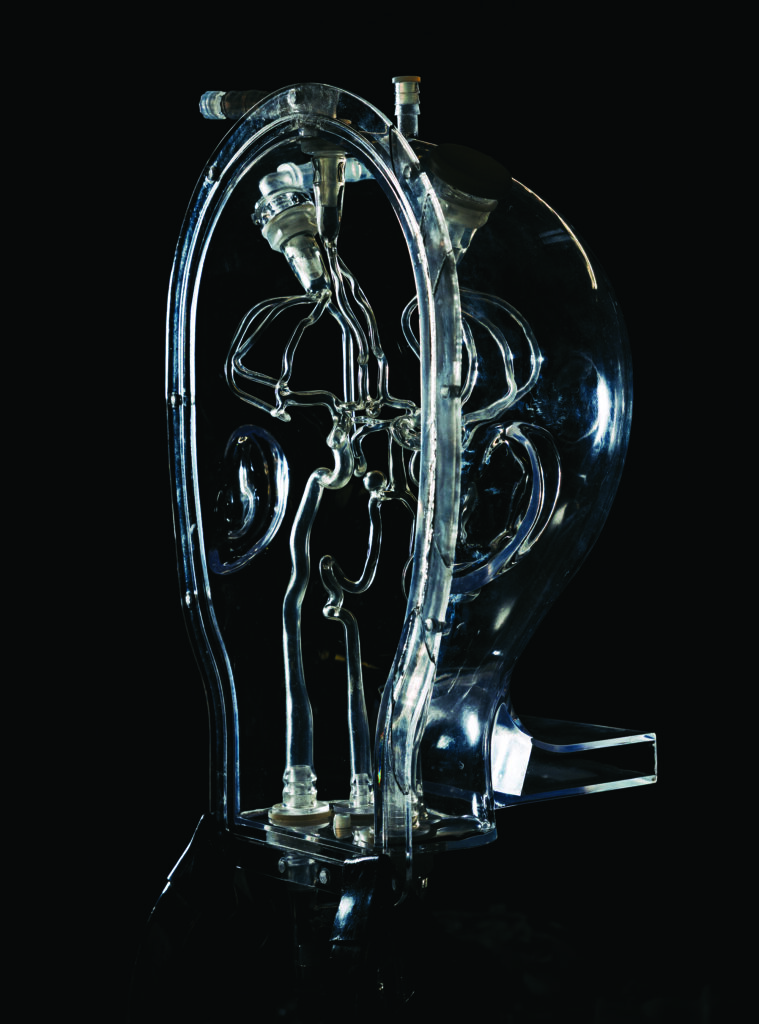
In the critical minutes after an ischemic stroke, when a blood clot is blocking an artery to the brain, time becomes the enemy. The sooner the clot can be removed, the higher a patient’s chance of surviving and the lower the chance of brain damage. To remove a clot, doctors usually thread a catheter through blood vessels to vacuum or snag it, a procedure that became widely adopted within the past decade.
But the removal succeeds on the first try only about half the time. For the toughest clots — dense tangles of protein that break apart when grabbed — success rates plummet to 11%.
Now, Stanford researchers have developed a device, called a milli-spinner, that can dramatically shift those odds. The device rapidly twirls blood clots, shrinking them to a fraction of their size for easier removal.
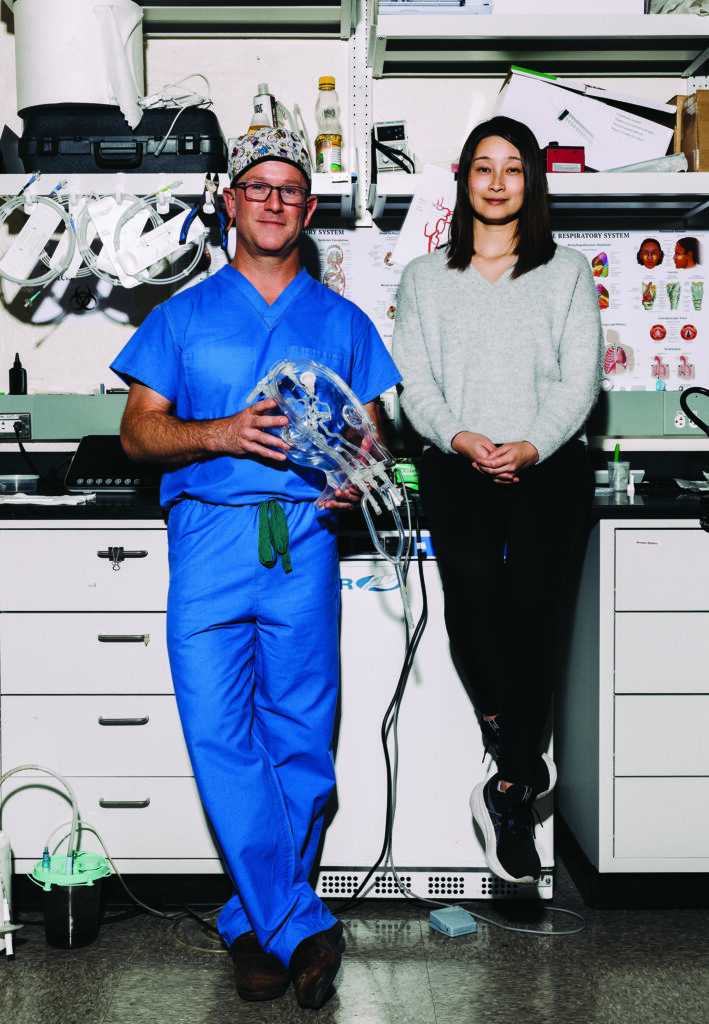
“When you’re treating a stroke patient, you want to get all of the clot out and get it out fast,” said Jeremy Heit, MD, PhD, chief of neuroimaging and neurointervention and an associate professor of radiology at Stanford Medicine.
“This new device could become the standard of care to get that done. We’re looking forward to seeing what it can do in patients, hopefully in the near future.”
Online extra
Listen to a Health Compass podcast with Jeremy Heit and Renee Zhao.
The milli-spinner wasn’t developed to shrink clots. Instead, Stanford University assistant professor of engineering Renee Zhao, PhD, was designing a tiny robotic device that she imagined could deliver drugs. But, when testing the device, which propels through blood vessels with spinning rotors, she noticed that the force created by the turning propeller created suction.
“We started to think, ‘Can we use this localized suction to suck up clots?’” Zhao recalled.
Her team added a tether to the milli-spinner to guide it purposefully through vessels rather than leaving it to swim freely. They quickly discovered that it does much more than just suction out clots. It also condenses the clots into tiny, dense balls.
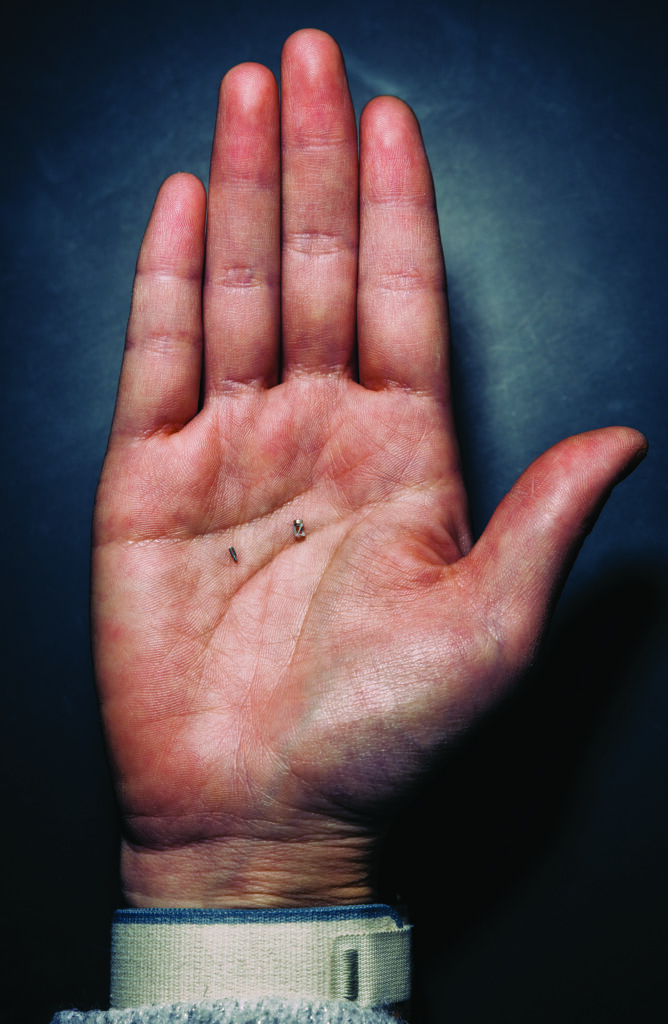
The spinning motion applies compression and shear forces, rolling the proteins that hold clots together — called fibrin threads — into a tight tangle and squirting out trapped blood cells.
“It was beyond our imagination,” Zhao said. “We could actually see the clot change color from red to white as the blood cells were squeezed out.”
A colleague put Zhao in touch with Heit, and they began testing the milli-spinner in animal studies, with support from the Wu Tsai Neurosciences Institute and Stanford Bioengineering. It took hundreds of iterations before they got it right — able to be threaded through the catheters doctors already use, guided to the clot site, and spun and removed without fragmenting.
The combination of Zhao’s engineering expertise and Heit’s clinical knowledge was critical, both researchers said. Zhao’s lab tweaked the design, 3D printing new versions again and again, while Heit ensured that the device would be compatible with existing clinical technology and useful for a real problem — the toughest clots in the brain.
“A lot of people would say one plus one is two, but what you actually learn in this kind of collaboration is that one plus one is like four,” Heit said. “The back-and-forth process of thinking and dreaming and being creative together exponentially amplifies what you’re doing.”
In June 2025, Zhao and Heit published the results of their animal trials in Nature. The milli-spinner, they reported, could shrink clots to as little as 5% of their original volume. For particularly stubborn clots, the device succeeded 90% of the time on the first attempt — dramatically better than current methods.
“The idea to actually change the morphology of the clot so it will pull out is a really novel concept; it’s very different from anything else that’s available right now,” said Mahesh Jayaraman, MD, a professor and the chair of radiology at Brown University and former president of the Society of NeuroInterventional Surgery.
Jayaraman said he was skeptical when he first heard about the milli-spinner. “But as I looked into the science of it, it really struck me as a remarkable collaboration between scientists and physician-scientists,” he said. “If it proves to be safe and effective, it could radically change how we treat ischemic stroke.”
For patients, the new technology — if it can remove blood clots more quickly and effectively than today’s approaches — could translate to improved quality of life and an easier path to recovery after a stroke.
“As a stroke survivor myself, I know how challenging the time after a stroke can be,” said Debra Meyerson, PhD, an adjunct professor at the Stanford Graduate School of Education and author of Identity Theft: Rediscovering Ourselves After Stroke.
With her husband, Meyerson co-founded the nonprofit organization Stroke Onward to help stroke survivors in their long-term recovery.
The people they support often face dramatic changes to their relationships, jobs and hobbies.
“We would love for there to be far less need for our work,” said Meyerson. “New innovative treatments like this blood clot removal technique give us hope that fewer people will face the devastating life changes a stroke all too often creates.”
Zhao and Heit have founded a company to commercialize the technology and move the milli-spinner toward human trials. Meanwhile, they are researching other applications, including removing clots from the brain’s smaller vessels and from vessels supplying the heart and lungs and treating peripheral vascular disease.
Support for research on understanding the fundamental science behind the milli-spinner and how the concept could be implemented has come from the Wu Tsai Neurosciences Institute, Stanford Bioengineering and individual donors, including Long Wang and Ming Liu. Support for translating the technology into real-world medical use has also included programs such as the Stanford High Impact Technology Fund and Stanford Medicine Catalyst.
Spotlight on Jeremy Heit
Associate professor of radiology
Jeremy Heit specializes in treating stroke, brain aneurysms and other conditions in the brain’s blood vessels using state-of-the-art technology. His research lab studies the underlying causes of reduced blood flow in the brain.
- Received his MD/PhD degrees from Stanford Medicine in 2007 and 2008 and joined the faculty in 2018.
- Growing up in Colorado, Heit was his high school’s valedictorian and the state champion in both gymnastics and diving. “I just had to remember when to land on my feet versus my head,” he said.
- Spends most of his free time cheering on his four children in swimming and water polo.
In his words: “Taking care of stroke patients is among my favorite things to do because it can really make an impact. It’s amazing to see a stroke patient get better right away and start moving in front of your eyes. I want that for every patient, and we need new technology to get there.”
Spotlight on Renee Zhao
Assistant professor of mechanical engineering
Renee Zhao’s lab focuses on making soft, intelligent robotic systems that can change shape, assemble, sense and navigate. Beyond applications in biomedicine, her materials are also useful in flexible electronics and sustainable energy.
- Hometown: Xi’an, an ancient capital of China, where the Terracotta Army can be found.
- Received degrees from Xi’an Jiaotong University and Brown University and joined the Stanford University faculty in 2021.
- Recharges her energy by spending time in nature.
In her words: “Collaborations with clinicians are really important so we make sure we’re using our designs to address unmet needs in biomedicine rather than artificial problems that don’t exist.”