

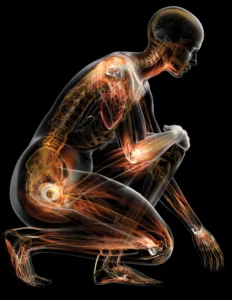
Pioneering advances that keep us in motion
A long arc of success in diagnosing, treating and preventing musculoskeletal conditions that threaten mobility
Letter from the Dean
Regrowing cartilage. Personalized joint implants. A device that aligns slipping vertebrae without fusion surgery — allowing the spine to bend and twist as before. These pioneering advances, among many others emerging from Stanford Medicine, reflect our long arc of progress in musculoskeletal health.
Orthopaedics stands as one of the oldest medical specialties because diagnosing, treating, preventing and rehabilitating musculoskeletal conditions have a profound impact on human life. Ancient civilizations in China, Egypt, Greece and India chronicled best practices for treating broken bones — an existential injury that threatened livelihoods, diminished quality of life and could lead to death. Millennia later, our priorities are not so different, but the tools we have are.

Modern hip replacement surgeries — a far cry from 19th-century experimental ivory implants — are considered among the most successful and cost-effective procedures ever developed. They relieve pain, rapidly restore function and mobility, and enable patients to enjoy healthy and productive lives for years and even decades more. Stanford Medicine researchers have contributed to this procedure’s success, including through a 2021 study that showed that a simple blood test analyzing immune function can forecast how quickly a person undergoing hip replacement surgery will recover.
While hip replacements exemplify orthopaedics’ impact on older adults, caring for children involves unique challenges, including protecting bone development and long-term resilience. Researchers at Stanford Medicine, for example, are investigating how weight-bearing exercise and other types of mechanical stress during childhood cause bones to bank strength against osteoporosis and later fractures — and how chronic inflammation, poor nutrition or limited mobility can undermine this critical process.
When bones need treatment, our researchers and clinicians have pioneered new approaches, including the use of magnet-powered implants that internally lengthen bones for people with leg-length discrepancies. This eliminates the need to pierce skin and muscles for months with external bracing. Research-driven advances like these offer lasting gifts to many. Often they go beyond simply treating a condition to expanding healthspan — the number of healthy years people live. We take pride not just in the number of successful operations and treatments but in the stories we hear of retirees resuming hiking, children running alongside classmates without pain and athletes returning to competition after injury — simple joys that might have seemed miraculous just a generation ago.
In this latest issue of Stanford Medicine magazine, we document some of these breakthroughs, exploring orthopaedics’ profound influence on human health and Stanford’s role in shaping the field’s future. In these stories, you’ll meet the physicians, surgeons and researchers advancing science and redefining standards of care — continuing a tradition that goes back millennia.
Sincerely,
Lloyd Minor, MD
Carl and Elizabeth Naumann Dean of Stanford School of Medicine
Vice President for Medical Affairs at Stanford University
Professor of Otolaryngology-Head & Neck Surgery