Jostling for distinction
Cell tumbling’ may help cells differentiate into tissue types
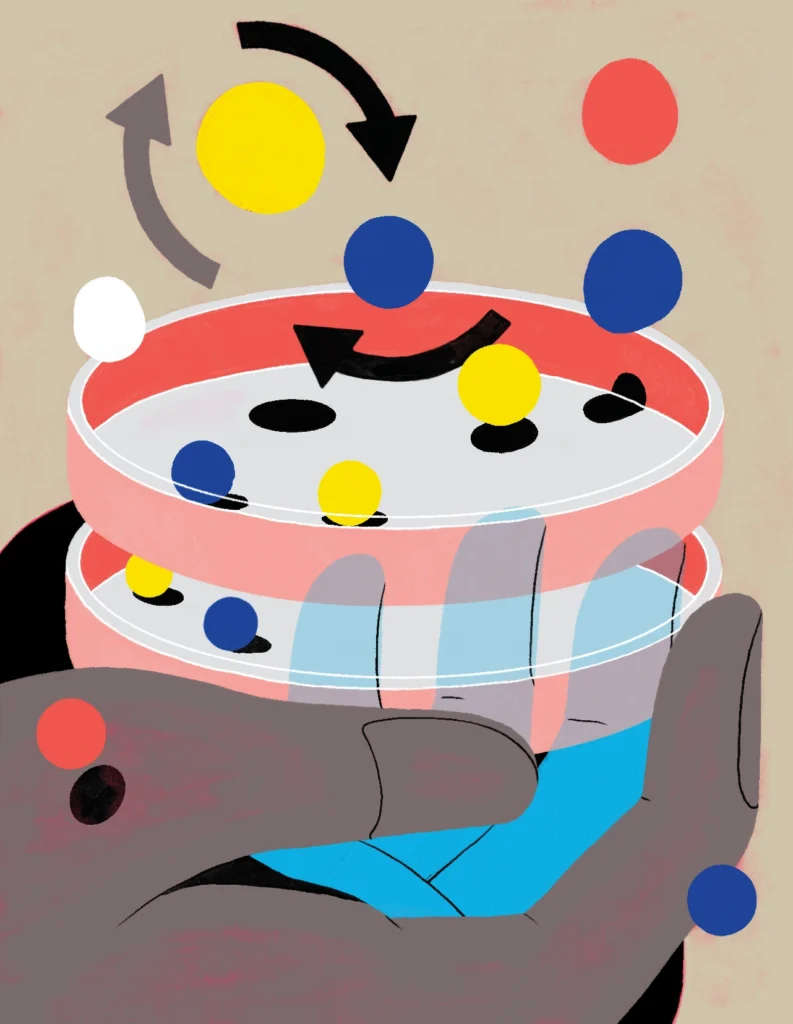
Stanford Medicine researchers have described a previously unknown type of cell movement they believe helps stem cells transform into different types of tissue. The finding, reported Nov. 1, 2024, in Nature Materials, suggests that differentiation depends not only on chemical signals, which is how researchers typically induce stem cells to differentiate in the lab, but also physical signals.
Manish Ayushman, a graduate student in bioengineering and the paper’s lead author, watched more than 1,000 hours of microscopic footage of stem cells. At first, the cells seemed to be not doing much of anything. But when Ayushman looked more closely, he noticed they were turning and pulsing ever so slightly.
When he sped up the footage, the movements became clearer: Each stem cell appeared to be shimmying and shaking with purpose. The researchers call the movements cell tumbling.
They showed that cell tumbling enhances stem cell differentiation into other tissues in the lab, such as bone and fat, though they do not know whether it occurs naturally in the human body. After the researchers chemically induced stem cells to differentiate into cartilage, the cells that were allowed to tumble unimpeded over the initial four days formed the most cartilage.
The researchers hope to translate the discovery into more efficient ways to generate replacement cartilage and other tissues from a patient’s own stem cells.
“Cartilage is one of the most commonly injured tissues in the human body, yet it has very limited capacity to regenerate,” said the paper’s senior author, Fan Yang, PhD, associate professor of orthopaedic surgery and of bioengineering.
Read the full story here.